Different Tools, Different Markets
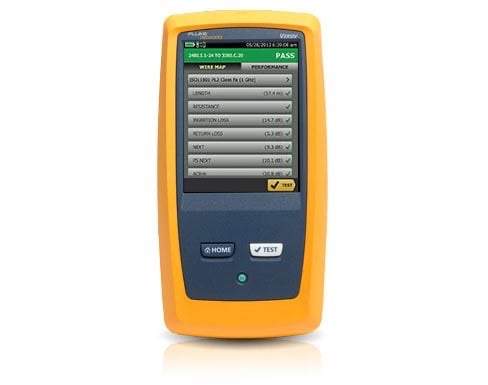
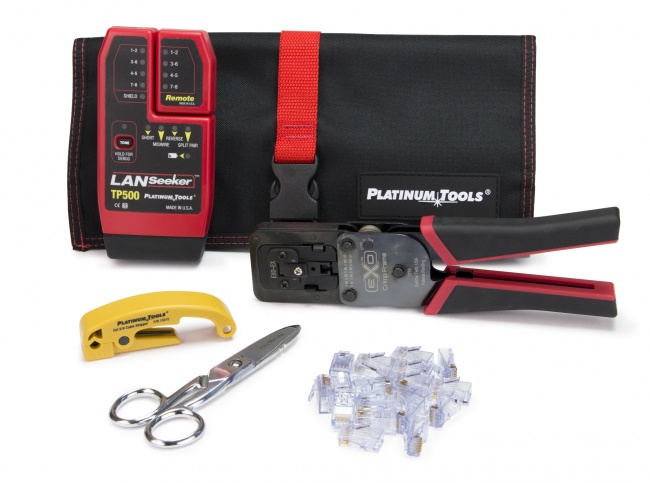
The Trendnet vs Fluke comparison is not really a head-to-head between equivalent products. Trendnet's cable testers (TC-NT2, TC-NT3) are consumer-tier verification tools. They sell at sub-$100 prices, target homeowners, hobbyists, IT generalists, and small-shop technicians who do not need warranty-grade documentation. Fluke's cable testers (MicroScanner family, LinkIQ, DSX certifiers) are professional-tier instruments. They sell at $500 to $15,000+, target commercial installers and certified test shops, and produce documentation accepted by major manufacturer warranty programs.
That said, the question is legitimate. Many professionals look at the Trendnet pricing and wonder whether they really need to spend ten times as much for Fluke. The answer is: sometimes yes, sometimes no. This guide walks through where each tool earns its keep so you can make an honest decision rather than defaulting to either "buy Fluke always" or "Trendnet is fine for everything."
Quick Verdict
Pick Fluke MicroScanner if: You are a commercial installer or MSP. You need TDR distance-to-fault, port discovery, IntelliTone digital cable ID, or PoE detection (MicroScanner PoE). You produce results that customers see and act on. You need rated accuracy and field-grade durability.
Pick Fluke LinkIQ or higher if: You need cable performance testing, network analysis, or certification reports. Trendnet does not compete here at all.
Side-by-Side Comparison
| Feature | Trendnet TC-NT3 | Fluke MicroScanner Cable Verifier | Fluke MicroScanner PoE | Fluke LinkIQ |
|---|---|---|---|---|
| Tier | Verifier (consumer) | Verifier (pro) | Verifier + PoE (pro) | Network analyzer (pro) |
| Continuity / wiremap | Yes | Yes | Yes | Yes |
| Cable length | Limited | Yes (TDR) | Yes (TDR) | Yes (TDR) |
| Distance to fault | No | Yes | Yes | Yes |
| Cable mapping (numbered remotes) | Yes (8 included) | Optional | Optional | Yes |
| Tone generator | Included | IntelliTone | IntelliTone | IntelliTone |
| PoE detection | No | No | Yes (af/at/bt) | Yes |
| Port discovery / hub flash | No | Yes | Yes | Yes |
| Cable performance test | No | No | No | Yes (to 500 MHz) |
| Network analysis (VLAN/DHCP) | No | No | No | Yes |
| Build / field durability | Consumer | Field-rated | Field-rated | Field-rated |
| Documentation / reporting | None | Limited | Limited | LinkWare |
| Calibration available | No | Yes | Yes | Yes |
| Price tier | $ | $$$ | $$$ | $$$$ |
Where Trendnet Honestly Earns Its Place
The Trendnet TC-NT3 kit (and similar consumer-tier testers from NOYAFA, Cable Matters, and others) deserves a fair hearing. There are real scenarios where Trendnet is the right tool.
Homeowner verifying DIY runs
If you ran four Cat6 drops to your home office and want to verify they terminate correctly, a $50 Trendnet tester will do it. Spending $500 on a Fluke for this is overkill. Continuity, wiremap, and basic mapping cover the verification need.
Hobbyist building a home lab
Same logic. Patch cables, short runs, verifying terminations on cables you crimp yourself. Trendnet is appropriate to the scope.
IT generalist troubleshooting at a small office
The IT generalist who manages a 20-person office and pulls a cable for a new desk maybe twice a year does not need Fluke-grade tools. A Trendnet tester verifies the cable is wired correctly and the basic patch panel is right. For occasional use, this is fine.
Backup tester for a pro
Professional installers who own a Fluke MicroScanner or Platinum Tools VDV MapMaster as their primary tool often keep a Trendnet TC-NT3 as a backup. It costs little, fits in a glove box, and does not represent significant loss if damaged or stolen. When the primary tester is in the shop for calibration or unavailable, the Trendnet keeps the work moving.
Apprentice / training tool
Letting an apprentice learn cable testing on a $50 Trendnet rather than a $500 Fluke makes sense. Mistakes are inexpensive. When the apprentice graduates to billable work, they upgrade.
Where Fluke Justifies Its Price
The Fluke price reflects real capabilities Trendnet does not have.
TDR distance-to-fault
When a cable fails, finding the fault location matters more than knowing the cable is bad. The Fluke MicroScanner's TDR sends a pulse and measures the reflection from the fault, telling you whether to look 12 feet from the jack or 80 feet up in the ceiling. Trendnet does not provide this -- it tells you the cable is bad and stops there.
IntelliTone digital cable ID
Fluke's IntelliTone uses digital signaling that filters through PoE noise, fluorescent ballast interference, and dense cable bundles where analog tone fails. In environments where you actually need to trace cable in interference (commercial installations, server rooms, anywhere PoE is live), IntelliTone works when analog tone does not.
PoE detection (MicroScanner PoE)
The Fluke MicroScanner PoE detects all PoE standards (af, at, bt) and measures voltage on each pair. Critical for commissioning PoE-powered devices. Trendnet does not address PoE at all.
Port discovery / hub flash
Connect to a switch port and the MicroScanner identifies the link speed, duplex, and can flash the switch's port LED in a recognizable pattern. Useful when working in unlabeled cabinets. Trendnet does not provide this.
Field durability and accuracy
Fluke MicroScanner units survive ladder drops, contractor abuse, and temperature swings. Trendnet units are consumer-grade plastic. For tools that work hard every day in field conditions, the durability difference is real.
Calibration and traceability
Fluke instruments have calibration certificates that customers and warranty programs accept. Trendnet does not. If your test results need to be traceable, Fluke is required.
The Honest Recommendation
If you are reading this guide because you are a working installer trying to decide whether you really need Fluke or whether Trendnet will do, the answer is almost always Fluke (or Platinum Tools, Klein, NetAlly -- one of the professional tier brands). The reason is not snobbery -- it is that the features Trendnet skips are the features that resolve the hardest problems and produce the documentation customers expect. The savings on the front end are eaten back in extra time spent on jobs and lost credibility on documentation that does not look professional.
If you are reading this because you are a homeowner or hobbyist verifying your own cable runs, save the money. Trendnet is honestly fine. Buy it, use it, do not feel bad.
If you are a working pro looking for a backup tester to keep in the truck alongside your primary Fluke or Platinum Tools unit, Trendnet's price-to-feature ratio at the verifier tier makes sense. Backup tools do not need to match primary tools.
For the broader landscape of options, see our Best Cable Testers for 2026 and Best Budget Cable Testers Under $200 guides.
Related Reading
- Cable Tester vs Certifier -- understanding the tier you actually need.
- Best Fluke Alternatives for Cable Testing -- alternatives that compete with Fluke at the professional tier.
- Fluke MicroScanner vs VDV MapMaster -- pro-tier verifier comparison.
The Hidden Cost of Cheap Tools
Conversations about budget cable testers usually focus on acquisition cost. The hidden costs only show up over time -- and for working pros, they often dwarf the upfront savings. Here is what gets undercounted.
Diagnostic time you cannot bill
The Trendnet tells you the cable is bad. It does not tell you where. You spend an hour walking the run, pulling ceiling tiles, looking for the fault. With a Fluke MicroScanner showing distance to fault, that hour is five minutes. At a typical billable rate, the time cost on a single fault hunt exceeds the price difference between the tools.
Misdiagnosis costs
Without TDR distance to fault, without port discovery, without PoE detection, you spend more time chasing wrong leads. Replace a cable that was not actually the problem. Suspect a bad port that turned out to be a configuration issue. Each wrong-trail diagnosis is hours of unbilled work plus the parts cost.
Reputation impact
Customers see the tool you pull out of your bag. A pro tool signals competence and justifies professional rates. A consumer tool signals the opposite. This is not vanity -- it is a real factor in customer perception that affects ongoing relationships and referrals. Your tools tell a story before you say a word.
Documentation that does not look professional
Trendnet's documentation output -- to the extent it has any -- is consumer-grade. Fluke's LinkWare reports look like the work of a professional shop. When you hand over results to a project manager or facility owner, the difference in document quality affects how your work is perceived and what they say to the next contractor they recommend.
Tool failure during a job
Consumer tools fail more often. When the Trendnet stops working halfway through a project, you have a problem. When the Fluke needs service, it is annoying but the build quality means it usually keeps running. Field reliability has real productivity value.
Real Scenarios: Which Wins?
Scenario 1: Homeowner verifying their own DIY runs
Winner: Trendnet. The work is occasional, the cables are short, the requirements are minimal, and saving $400 on a tool you use twice a year is the right call.
Scenario 2: IT generalist supporting a 20-person office
Winner: Trendnet (with caveats). If the office has stable infrastructure and you only pull a cable occasionally, Trendnet is fine. If you actively troubleshoot network issues, the Fluke MicroScanner's port discovery and PoE detection (on the PoE model) pay back quickly.
Scenario 3: Low-voltage installer doing 100+ residential drops a month
Winner: Fluke MicroScanner (or Platinum Tools VDV MapMaster). Volume work demands tools that diagnose quickly. The cost difference is recouped in time savings within months.
Scenario 4: Commercial installer producing certification reports
Winner: Fluke DSX (or Softing WireXpert / Ideal LANTEK). Trendnet is not in the conversation here. Even Fluke MicroScanner is not -- this scenario requires a true certifier.
Scenario 5: MSP technician troubleshooting client networks
Winner: Fluke LinkIQ (or NetAlly LinkRunner). Network analysis capability is the priority, not raw cable verification. Trendnet does not address this need at all.
Scenario 6: Pro who wants a backup tester in the truck
Winner: Trendnet TC-NT3. This is the one scenario where Trendnet earns its place in a pro's kit. Low cost, basic capability, fits in a glove box. Not the daily driver, but always available.
Frequently Asked Questions
Is Trendnet as good as Fluke for cable testing?
For basic verification on hobbyist or homeowner work, yes. For commercial installation, professional documentation, or warranty work, no. The price gap reflects real capability differences -- TDR fault location, digital cable ID, PoE detection, calibration, durability.
What is the difference between Trendnet TC-NT2 and TC-NT3?
The TC-NT2 is the basic single-remote version. The TC-NT3 is the multi-remote kit with eight numbered remotes for cable mapping plus a tone generator. The TC-NT3 is the more useful tool for installer work; the TC-NT2 is a budget pick for single-cable verification.
Can a Trendnet tester replace a Fluke MicroScanner?
For homeowner use, yes. For professional installer use, no -- the MicroScanner has TDR distance-to-fault, IntelliTone, port discovery, and (on the PoE model) full PoE detection that Trendnet does not match.
Are Trendnet results trustworthy for warranty work?
No. Trendnet testers are not validated to TIA-1152-A and produce results that warranty programs do not accept. For warranty-grade documentation, you need a Fluke DSX, Softing WireXpert, or Ideal LANTEK certifier.
Where does Trendnet fit in a pro's tool bag?
As a backup tester, a loaner for assistants, or a low-cost option to keep in vehicles for occasional use. The TC-NT3 kit is hard to beat as a backup that does not represent significant loss if damaged.
Find Your Cable Tester
From budget verifiers to professional certifiers. Expert support to match the tester to your work and budget.