The Quick Answer
What These Tools Are For
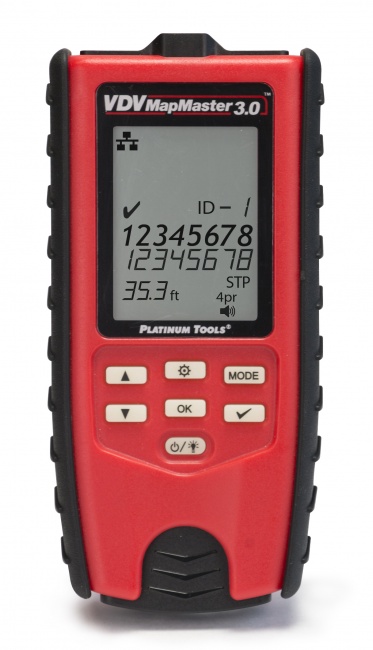
Both the Fluke MicroScanner 2 and the VDV MapMaster 3.0 are field cable testers. They live in the tool bag of a low-voltage installer doing voice/data/video work. They handle the questions that come up dozens of times a day: is this cable wired correctly, how long is this run, where does this cable go, and is the cable shielded.
Neither tool is a certifier. Neither produces TIA-568 compliance reports or measures NEXT, return loss, or insertion loss against frequency-based standards. If your job requires certification documentation, you need a cable certifier, not a field tester. For a fuller breakdown of where field testers stop and certifiers begin, see our guide on cable tester vs cable certifier.
What field testers do well is fast, accurate verification of the things that go wrong on real installations: bad terminations, miswires, broken pairs, wrong-length runs, and cable misidentification at the patch panel. The MicroScanner and VDV MapMaster are direct competitors in this space, separated mostly by price and brand.
Side-by-Side Specifications
| Feature | Fluke MicroScanner 2 | VDV MapMaster 3.0 |
|---|---|---|
| Wiremap (opens / shorts / miswires) | Yes | Yes |
| Split pair detection | Yes | Yes |
| Cable length (TDR) | Yes (~5% accuracy) | Yes (~6% accuracy) |
| Distance to fault | Yes | Yes |
| Tone generator | Yes (continuous tone, 4 cadences) | Yes (4 tone modes) |
| Hub blink (port locator) | Yes | Yes |
| Coax (F-connector) testing | No (RJ45 only) | Yes (with adapter) |
| Display | Monochrome graphical LCD | Color graphical LCD |
| Battery | 2x AA (alkaline) | 9V (alkaline) |
| Drop rating | Drop-tested 6.5 ft | Drop-tested 6 ft |
| Carrying case | Soft case included | Hard case in kit configs |
| Typical street price (kit) | $370 - $480 | $180 - $260 |
| Warranty | 1 year | Limited lifetime |
Fluke MicroScanner 2: Strengths
Build quality and ergonomics
The MicroScanner feels expensive in the hand. The case is solid, the buttons are tactile, and the rubber overmold has held up well across years of fieldwork in shops we have talked to. The tester is drop-rated to 6.5 feet, which is more than enough for typical job-site abuse. For a tool that lives in a tool bag full-time and gets used dozens of times daily, the build quality is a meaningful long-term advantage.
Brand recognition
On commercial job sites, the MicroScanner is recognized by inspectors and other trades as a Fluke tester. This matters more than it should. When a GC asks what you used to verify a cable, "MicroScanner" lands cleanly. The VDV MapMaster's reputation is strong among installers but less universal across the broader trades.
Fluke ecosystem
For shops standardized on Fluke -- DSX certifiers, LinkIQ analyzers, MicroScanner field testers -- staying within the brand keeps service relationships, training, and parts sourcing consistent. The MicroScanner does not integrate directly with LinkWare Live, but it is part of the broader Fluke product family that does.
Speed and simplicity
The MicroScanner's interface is minimal: a few buttons, a clear graphical display, and immediate test feedback. There is no menu diving for a basic wiremap test. For an experienced installer doing 50+ tests a day, the simplicity adds up to real time savings.
VDV MapMaster 3.0: Strengths
Price
At $180-$260 in kit configurations, the VDV MapMaster 3.0 costs roughly half what the MicroScanner does. For a contractor equipping multiple installers, the savings stack up: outfitting a five-person crew with VDV MapMasters instead of MicroScanners saves roughly $1,000. That money buys other tools or comes straight off the project cost.
Numbered remote IDs
The VDV MapMaster 3.0 supports numbered remote ID locators with the available Smart Remote Set. For new construction projects with dozens of unlabeled drops at a patch panel, this is a major productivity advantage. Drop a remote at each jack, then walk the panel mapping each port to the correct location. The MicroScanner tops out at 8 remote IDs, requiring more trips and more re-labeling work for the same task.
Color display
The VDV MapMaster 3.0 has a color graphical display that makes wiremap diagrams clearer at a glance. Pass/fail color coding, pair-by-pair status, and clearer length displays read faster in low-light environments like ceiling spaces and crawl spaces. The MicroScanner's monochrome display is functional but a step behind.
Coax testing
The VDV MapMaster 3.0 supports coax (F-connector) testing with an adapter, useful for installers who work mixed RJ45 and CATV environments. The MicroScanner is RJ45-only. For a contractor doing whole-home AV work alongside data installs, the VDV's coax support saves a separate tool.
Limited lifetime warranty
Platinum Tools backs the VDV MapMaster 3.0 with a limited lifetime warranty. The MicroScanner carries a 1-year warranty. For a tool that may live in a tool bag for 10+ years, the warranty difference is real, even accounting for the typical fine print on lifetime warranty terms.
Where the MicroScanner Wins
- Build quality -- premium feel, slightly higher drop rating, better long-term durability
- Brand recognition -- universally known on commercial job sites and by inspectors
- Fluke ecosystem fit -- consistent with shops standardized on DSX and LinkIQ
- Resale value -- holds price better on the used market
- Service network -- larger authorized service footprint for repairs
Where the VDV MapMaster Wins
- Price -- roughly half the cost for similar core capability
- Remote ID scaling -- more numbered remotes than the MicroScanner, a real advantage on large new-construction projects
- Color display -- clearer pass/fail and pair status reading
- Coax support -- F-connector testing with adapter, useful for mixed-media work
- Lifetime warranty -- meaningful for a tool that lives in a tool bag for years
- Lower replacement cost -- losing or breaking a $200 tester hurts less than a $400 one
The Decision Framework
For shops just starting to outfit crews, our recommendation is generally the VDV MapMaster 3.0. The cost savings let you buy more testers, equip more installers, and absorb the occasional lost or broken unit without budget pain. The MicroScanner is the better tool in absolute terms, but "better" by 10-15% does not justify "twice the price" for most working contractors.
What Neither Tool Replaces
Both testers are wiremap-and-length tools. Neither performs cable performance testing (frequency-based measurements like NEXT and return loss). Neither does PoE testing or network analysis. Neither produces TIA/ISO certification reports.
If your work requires certification documentation, see the certifier category. If you need to verify gigabit throughput before formal certification, that is a qualifier's job and not one we can sell you: Platinum Tools discontinued the qualifier that filled the tier and CableTestShop has not replaced it. If you need PoE testing, see our best PoE testers of 2026 guide. The MicroScanner and VDV MapMaster are excellent at their job; they are not meant to be more than what they are.
Real-World Use Patterns
Both testers handle the same core job, but they fit into different patterns of use. Looking at how each tool actually gets used in a tool bag day after day reveals practical differences that specifications miss.
The single-installer truck
For an installer working solo or as the lead on small crews, the field tester comes out 20-50 times a day on a typical install job. It tests every cable as it is terminated, verifies length on every drop, and identifies cables at the patch panel. With this volume of use, the tester's feel matters. Buttons that are slightly too small, displays that are slightly too dim, or menus that take an extra step add up to real fatigue and lost time over the course of a day.
For this user, the MicroScanner's premium build pays off. The tactile feedback on the buttons, the clear monochrome display in varied lighting, and the rugged case all hold up better with daily heavy use. The price gap over the VDV MapMaster amortizes across the volume of testing, and the better tool feel directly affects productivity.
The crew tool
For shops equipping multiple installers, each field tester is one of several similar tools across the crew. Replacement is more frequent (loss, damage, theft) and the tester is shared more often than in the solo-installer pattern. The economics shift from "best tool for the heaviest user" to "best dollar-per-installer-equipped."
For this use pattern, the VDV MapMaster's price advantage compounds quickly. Equipping a five-person crew with VDV MapMasters costs roughly $1,000-$1,300. Equipping the same crew with MicroScanners costs $1,850-$2,400. The difference -- $850-$1,100 -- buys other tools, absorbs replacement costs, or simply stays on the bottom line. The MicroScanner's marginal feel advantage does not justify the premium when spread across a crew.
The truck spare
Most established shops carry a spare field tester in each truck for backup, apprentice use, or loaner duty. The spare gets used less than the primary tester but needs to be functional when needed. The economics here favor the cheaper tool: a $200 VDV MapMaster as a backup makes sense; a $400 MicroScanner as a backup is hard to justify.
For shops standardized on Fluke for the primary tool, a VDV MapMaster as the truck spare is a sensible compromise. It does the same core work at half the cost. Apprentices learn on the cheaper tool. Loaner units are less expensive to replace if not returned.
Long-Term Ownership
Field testers are not consumables but they are not heirloom tools either. Most testers live in the field for 5-8 years before being replaced due to damage, obsolescence, or feature evolution. The total ownership picture matters more than the purchase price.
Durability and repair
Both tools have generally good track records for durability. The MicroScanner's drop rating is slightly higher (6.5 ft vs 6 ft) and the case feels more rugged. In actual fieldwork, both survive the typical bumps and falls. Repair availability is similar -- Fluke's authorized service network is larger but Platinum's warranty is more generous on the front end.
Resale value
Used MicroScanners hold value better than used VDV MapMasters on the secondary market. A 5-year-old MicroScanner in working condition typically sells for $150-$220 (40-60% of new price). A 5-year-old VDV MapMaster typically sells for $80-$130 (40-55% of new price). In absolute dollar terms, the MicroScanner returns more on resale; in percentage terms, the depreciation rates are similar. For shops that upgrade tools every 5+ years, the MicroScanner's higher resale partially offsets its higher purchase price.
Battery and accessory availability
Both tools use standard batteries (AA or 9V alkaline) that are widely available. Replacement remote IDs, adapter sets, and accessory kits are stocked by most low-voltage distributors. Long-term availability of consumables is not a meaningful differentiator between the two.
Frequently Asked Questions
Is the Fluke MicroScanner more accurate than the VDV MapMaster?
Both are wiremap and verification tools, not certifiers. The MicroScanner's TDR length measurement is slightly more refined (within 5%) versus the VDV's (within 6%). In practical fieldwork, the difference is not meaningful. Neither produces TIA/ISO compliance results.
Why is the VDV MapMaster cheaper?
Platinum Tools competes on price-to-feature ratio rather than brand premium. Their manufacturing scale and channel focus on structured cabling let them deliver wiremap, length, and tone features at roughly half the MicroScanner's price. The gap reflects branding and ecosystem rather than fundamental capability.
Which tester supports more remote IDs?
The VDV MapMaster 3.0 supports more numbered remote ID locators than the MicroScanner. For new-construction projects with hundreds of unlabeled drops at the patch panel, the VDV is materially faster.
Do either of these testers do PoE testing?
No. Neither performs PoE detection or load testing. For PoE work, you need a dedicated PoE tester or a network analyzer. See our best PoE testers of 2026 guide for the right tool.
Procurement, Distribution, and Replacement
Practical procurement matters when you're outfitting multiple technicians or replacing damaged units.
MicroScanner Distribution
The Fluke Networks MicroScanner is sold through Fluke's authorized distributor network including major electrical and datacom suppliers. Lead times are typically short for current production models. Discontinued legacy MicroScanner models occasionally surface on the secondary market in well-maintained condition.
VDV MapMaster Distribution
Klein Tools' VDV MapMaster benefits from Klein's massive distribution presence across electrical supply houses, big box retail, and online channels. You can typically have a unit shipped overnight from major distributors. Replacement remotes and accessory kits are stocked widely.
Bulk Crew Outfitting
For shops outfitting 5-15 technicians simultaneously, both manufacturers offer volume discounts through their authorized distributor networks. Klein's pricing tends to be more aggressive on volume orders given the broader product portfolio relationship. Fluke distributors will negotiate but typically have less flexibility on the MicroScanner specifically.
Field Workflow Examples
Concrete examples of how each tool fits into common contractor workflows.
Pre-Punch Cable Verification
Both testers handle pre-punch verification well. Sweep through fresh pulls before termination to catch damaged cables before they're terminated and certified. The MapMaster's larger remote count makes it faster on multi-cable batch verification at the equipment room end.
Post-Termination Continuity Check
After punching down or crimping, both tools confirm wire-map correctness and continuity end-to-end. The MicroScanner's compact form factor makes it easier to use one-handed during termination work. Either tool catches the most common termination errors immediately.
Cable Identification at the Patch Panel
This is where the MapMaster shines. With numbered ID remotes plugged into ports throughout the building, you can identify and label every cable at the patch panel in a single sweep. The MicroScanner requires a tone generator and probe for true cable tracing — slower but workable for smaller installations.
Service Call Troubleshooting
For service calls where you need quick continuity verification on a single suspect cable, both tools work. The MicroScanner's compact form factor is slightly more service-call friendly. The MapMaster's PoE detection (varies by model) adds a useful bonus for VoIP service calls.
Outfit the Crew, Not Just One Tech
The best field tester is the one every installer on your crew has in their tool bag. Browse our cable tester selection for crew-friendly options at the right price.