The Short Version
Why This Matters
Most low-voltage contractors started in copper. Cat5e and Cat6 are familiar, the test equipment is straightforward, and the workflow is well-understood. Fiber is a different world: different connectors, different physics, different test methodology, and a different set of failure modes.
For contractors considering adding fiber to their service offerings -- or considering whether to push back on customers asking for fiber instead of copper -- a clear cost comparison helps make the call. Fiber is the future for backbone, data center, and high-density wireless infrastructure. But fiber test economics are not the same as copper.
Equipment Cost Comparison
The starting point: what does it cost to walk onto a job with the right tools?
Copper test kit (full capability)
- Verification tester (VDV MapMaster 3.0) -- $168.14
- Speed certifier -- rental or subcontract; we do not currently list one
- Tone generator (Digital Tone Probe) -- $202.66
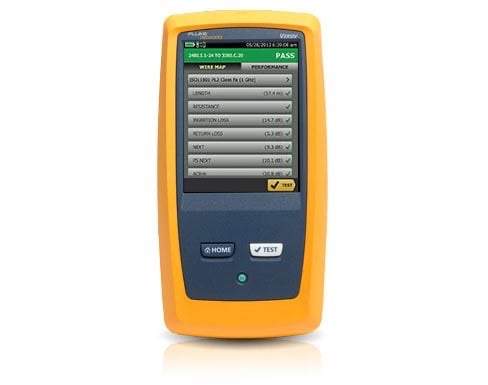
- Full TIA certifier (Fluke DSX2-5000 or WireXpert 500) -- $9,000-$15,000
- Total entry level: ~$2,910
- Total with full certification: ~$12,000-$18,000
Fiber test kit (full capability)
- OLTS (Optical Loss Test Set) -- $4,000-$8,000
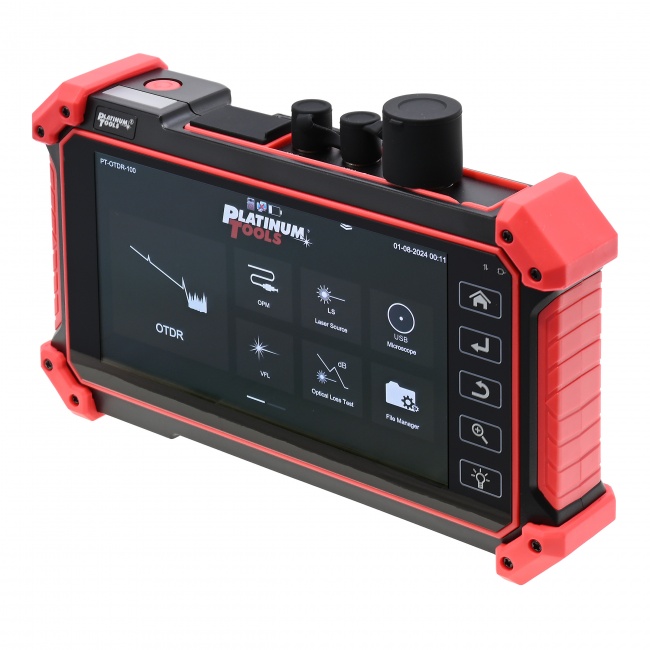
- OTDR (Optical Time Domain Reflectometer) -- $7,000-$15,000
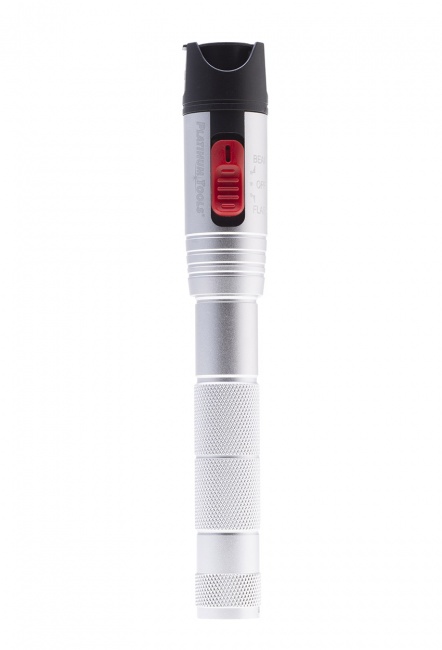
- Visual fault locator -- $50-$200 (browse VFLs)
- Endface inspection probe -- $1,500-$3,500
- Reference test cords (multimode + singlemode, multiple) -- $400-$1,000
- Cleaning supplies and tools -- $200-$500 initial
- Total entry level (OLTS only): ~$6,000-$10,000
- Total with OTDR (Tier 2): ~$13,000-$28,000
Per-Port Test Time Comparison
| Activity | Copper (per drop) | Fiber (per port) |
|---|---|---|
| Connect tester | 15 sec | 30 sec (more careful) |
| Endface cleaning | n/a | 60-120 sec |
| Endface inspection | n/a | 30-60 sec |
| Wiremap test | 3 sec | n/a |
| Length measurement | included | included |
| OLTS / certification | 9 sec (certifier) | 30-60 sec (bidirectional, dual wavelength) |
| OTDR shot | n/a | 30-90 sec (when required) |
| Documentation | 15 sec | 20 sec |
| TOTAL | ~90 sec | ~3 minutes |
The endface cleaning and inspection step is what makes fiber slower. A contaminated fiber endface causes the most common fiber failure -- excessive insertion loss -- and skipping cleaning is not optional. On a 100-port project, fiber adds approximately 2.5 hours of test time over copper.
Consumables and Ongoing Costs
Copper annual costs
- Certifier calibration -- $400-$600/year
- Patch cord replacement -- $30 every 12-18 months
- Test adapter wear (DSX channel adapters) -- $200-$400/year amortized
- Total annual: ~$500-$800
Fiber annual costs
- OLTS calibration -- $400-$600/year
- OTDR calibration -- $300-$500/year
- Reference cord replacement -- $400-$800/year (high-use)
- Cleaning supplies (wipes, fluid, click cleaners) -- $300-$600/year
- Endface probe tips and replacement -- $100-$400/year
- Total annual: ~$1,500-$3,000
Training and Skill Investment
Copper testing is largely intuitive after one project. The wiremap is visible, the failure modes are obvious, and the test sequence is short. A new technician can be productive on copper testing in a day.
Fiber testing requires more deliberate training. Topics that take time to learn:
- Reference cord hygiene -- when to clean, when to inspect, when to replace
- OLTS reference setup -- one-cord vs three-cord reference methods, encircled flux compliance for multimode
- OTDR trace interpretation -- distinguishing splices from connectors from breaks, understanding deadzones, recognizing ghost reflections
- Connector polishing inspection -- recognizing pits, scratches, contamination on the endface
- Wavelength selection -- multimode 850/1300 nm vs singlemode 1310/1550/1625 nm
BICSI Fiber Optic Installer (FOI) certification or equivalent training typically runs $1,500-$3,000 per technician with 2-5 days of class time.
5-Year Total Cost of Ownership
| Cost Category | Copper (Full Cert Kit) | Fiber (Tier 1 + OTDR) |
|---|---|---|
| Initial equipment | $12,000 | $22,000 |
| Training (1 tech) | $500 | $2,000 |
| Annual consumables (5 yr) | $3,250 | $11,250 |
| Annual calibration (5 yr) | $2,500 | $4,500 |
| Equipment depreciation | ~30% residual | ~25% residual |
| 5-Year TCO | ~$18,250 | ~$39,750 |
| Per drop @ 1,000/yr | $3.65 | $7.95 |
When Fiber Capability Pays Off
The math is straightforward: fiber test capability adds roughly $20K-$25K in 5-year cost over copper-only operations. The payback comes from work you cannot win without fiber:
Backbone and data center work
Inter-building backbone, data center fiber, and SAN connectivity is fiber-only. If you do not test fiber, you cannot bid these projects.
Distributed antenna systems and Wi-Fi 7 backhaul
High-density wireless deployments increasingly use fiber backhaul to switches near the AP locations. Contractors who can pull and certify both copper drops and fiber risers win the whole job.
Subcontract revenue
Fiber-capable contractors pick up subcontract work from copper-only firms who need fiber done on their projects. Per-port subcontract rates of $40-$80 for fiber testing are common.
Higher-margin work
Fiber installations carry higher margins than commodity copper drops because fewer contractors can do them. The premium more than offsets the equipment investment over 5 years on volume work.
For perspective on copper-side ROI, see our cable tester ROI guide. For an overall view of certification economics, read do you need a certifier.
Frequently Asked Questions
Is fiber testing more expensive than copper testing?
Yes. Per-drop, fiber testing costs roughly 2-3x copper in time and 2x in equipment. Annual consumables run $1,500-$3,000 for fiber vs $500-$800 for copper. The fiber cable itself is cheaper, but the test economics favor copper.
Do I need both an OLTS and an OTDR?
OLTS is required for Tier 1 certification (end-to-end attenuation). OTDR is required for Tier 2 (full path mapping with splice and connector visibility) and for troubleshooting. For new installs to Tier 1, OLTS alone is sufficient. For complex projects or troubleshooting, both.
How long does fiber certification take per port compared to copper?
Copper: ~90 seconds per drop. Fiber: ~3 minutes per port including endface cleaning and inspection. On a 100-port project, fiber adds about 2.5 hours of test time.
What consumables do I need to budget for fiber vs copper testing?
Copper: ~$500-$800/year (calibration + occasional patch cord). Fiber: ~$1,500-$3,000/year (calibration, reference cords, cleaning supplies, endface probe tips).
Build Your Test Kit
From copper-only verification to full fiber certification. Match the kit to the work you do today.