The Real Question
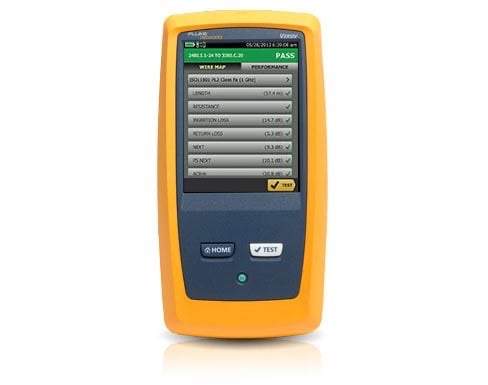
Cable certifiers exist to answer one question: does this installed cable meet the published performance standard for its rated category? A Fluke DSX2-5000 or Softing WireXpert measures dozens of electrical parameters -- NEXT, return loss, insertion loss, propagation delay, delay skew -- at hundreds of frequency points, then compares every result against the pass/fail limits defined in TIA-568 or ISO 11801.
This is powerful. It is also expensive, and it is not always necessary. The mistake contractors make is binary thinking: either they skip testing entirely (dangerous) or they assume they need a $12,000 certifier (often unnecessary). The right answer depends on three factors: what your contract says, what your warranty requires, and what level of accountability your business needs.
When You Don't Need Certification
Certification is overkill for the following scenarios. A qualification tester ($150-$500) provides everything you need:
Residential installations
Home network installations running at 1 Gigabit do not require certification. Cat5e and Cat6 cable at 1G speeds have wide performance margins -- a properly installed cable will work if the wiremap is correct and there are no split pairs. A VDV MapMaster 3.0 catches every issue that would actually cause a problem in a residential setting.
Small office / SMB work
A 20-person office getting a new Cat6 cable plant for Gigabit Ethernet does not typically require certification unless the contract specifically states otherwise. Test for wiremap, length, and split pairs. Document results. Move on.
Existing infrastructure troubleshooting
When you're called in to diagnose "the network is slow" or "this jack doesn't work," you need diagnostics, not standards compliance documentation. A qualification tester or a network-aware tester identifies the problem faster than a certifier, at a fraction of the cost. Be aware that this tier has thinned out: the Platinum Tools Net Prowler and Net Chaser that filled it are both discontinued, and CableTestShop does not list a replacement for either.
PoE device deployment
Installing IP cameras, wireless access points, or VoIP phones requires verifying cable integrity and PoE availability. A PoE tester and a basic cable tester cover this. Certification adds no value here unless the camera installation is part of a larger project with certification requirements.
Patch cable manufacturing
Making custom patch cables requires verification testing (wiremap, continuity). Certification testing of patch cables is done at the factory by cable manufacturers, not in the field by installers.
When You Need Certification
There are four situations where certification testing is not optional. If any of these apply to your work, a certifier is a business requirement, not a luxury.
1. Manufacturer warranty registration
All major structured cabling manufacturers require certification test results to activate their extended system warranties:
- Belden -- Requires certification to TIA or ISO standards for their IBDN warranty (25 years)
- Panduit -- Requires third-party or installer certification for their Certified Installer program warranty
- CommScope / Systimax -- Requires certification through their InstaPATCH or SYSTIMAX warranty programs
- Leviton -- Requires certification for their Opt-X and Network Solutions warranties
- Siemon -- Requires certification for their warranty on end-to-end cabling systems
These warranties typically cover 20-25 years and include the cable, connectors, patch panels, and in some cases the connected hardware. The warranty is a selling point to your client and a liability transfer to the manufacturer -- but only if you can produce the certification data.
2. Contract specifications
Read your contract. If it contains language like any of the following, you need a certifier:
"All horizontal cables shall be tested and certified to TIA-568.2-D Category 6A..."
"Contractor shall provide certification test reports for each cable run..."
"Testing shall comply with ANSI/TIA-568.2-D permanent link requirements..."
"Each cable shall meet ISO/IEC 11801-1 Class EA performance requirements..."
If you see "certified," "certification," or references to specific TIA/ISO standards with pass/fail requirements, qualification testing will not satisfy the requirement.
3. 10-Gigabit installations
Cat6A cable is designed for 10GBASE-T, but the margin for error at 10 Gbps is significantly tighter than at 1 Gbps. Installation defects that are invisible at Gigabit speeds -- excessive untwist at a termination, slight damage to the cable jacket, a connector with borderline crosstalk performance -- can cause link flaps, CRC errors, and speed negotiation failures at 10G.
If the cable is supposed to run at 10 Gbps, certification or speed verification is the only way to confirm it before the users find out the hard way. For TIA/ISO standards compliance, you need a full certifier. Note that a gigabit qualifier cannot answer the 10G question: proving a link at 1 Gb/s says nothing about whether it will sustain 10GBASE-T.
4. Liability protection on high-value installations
On large commercial installations -- hospitals, government buildings, data centers -- the cost of a post-installation failure can be enormous. A single bad cable run that causes a network outage in a hospital surgical suite has consequences that extend far beyond re-pulling a cable. Certification test results from the day of installation are your documented proof that the work met standards when you completed it.
The ROI Calculation
A cable certifier is an investment. Here's how to determine whether it makes financial sense for your business:
Cost of not certifying
- Rework cost -- A cable run that fails after the ceiling tiles are back costs 3-10x more to fix than catching it during installation. On a 200-drop project with a 5% failure rate found post-installation, that's 10 cable re-pulls at $200-$500 each: $2,000-$5,000 in unbillable labor
- Lost warranty -- Without certification, the cable manufacturer's warranty doesn't apply. Any failure becomes your liability, potentially for years
- Lost contracts -- Increasingly, commercial contracts require certification. Not owning a certifier means not bidding on those jobs
- Reputation -- Getting called back to fix failures that certification would have caught erodes your professional credibility
Cost of certifying
There are three approaches, each with different economics:
| Approach | Cost | Per Drop (1,000/year) | Best For |
|---|---|---|---|
| Outsource certification | $15-$40 per drop | $15-$40 | Contractors who certify <500 drops/year |
| Rent a certifier | $200-$400/day rental | Varies by volume | Contractors with 5-15 certification days/year |
| Rent a speed qualifier | Per-job rental, no calibration | Varies by volume | Contractors needing throughput verification |
| Buy WireXpert 500 (full cert) | Quote required + $400/year cal | ~$2.08 | Contractors certifying 1,000+ drops/year |
| Buy Fluke DSX2-5000 (full cert) | Quote required + $500/year cal | ~$3.10 | Contractors needing Fluke brand recognition |
The Middle Ground: Speed Certification
Between "basic testing" and "full TIA/ISO certification" sits a practical middle ground: speed qualification. A qualifier tests actual Ethernet throughput by pushing real data traffic through the cable and measuring the result -- up to 1 Gb/s -- rather than sweeping the link against TIA limits.
A qualifier does not measure individual electrical parameters like NEXT and return loss, so it won't satisfy a contract that specifies TIA-568 certification. But it definitively answers the question "can this cable actually run at gigabit?" -- which is often what contractors and their clients actually need to know.
For contractors who:
- Need to verify gigabit performance but don't have contracts requiring TIA/ISO certification
- Want documented proof of cable performance for their own records and liability protection
- Can't justify a $10,000+ certifier purchase at their current volume
- Want to offer "speed certified" as a value-add without the full certification investment
This tier fills a real gap, and at the moment it is a gap on our shelf too: CableTestShop does not currently stock a qualifier, and the Platinum Tools Net Chaser that filled that slot has been discontinued by the manufacturer. Contractors who need a throughput result on a specific job rent the instrument or subcontract that test. Budget for it before you quote the job, and make sure the terminations it is about to measure are right the first time.
Decision Framework
Answer these questions to determine your testing level:
| Question | If Yes |
|---|---|
| Do your contracts require TIA/ISO certification? | You need a full certifier (DSX or WireXpert) |
| Do you register manufacturer warranties? | You need a full certifier |
| Are you installing 10G infrastructure? | You need certification or speed verification |
| Do you need liability documentation? | Speed qualification may suffice |
| Are you doing residential/SMB installs? | Qualification testing is sufficient |
| Are you troubleshooting existing cable? | Qualification testing is sufficient |
Frequently Asked Questions
What cable manufacturers require certification for warranty?
Major manufacturers including Belden, Panduit, CommScope, Leviton, and Siemon all require certification test results for their extended system warranties. These warranties cover 20-25 years and include cable, connectors, and in some cases connected hardware. Qualification test results from lower-tier testers are not accepted.
How much does cable certification cost per drop?
Outsourced: $15-$40 per drop. Own a DSX2-5000 testing 1,000 drops/year: approximately $3.10 per drop. The economics heavily favor owning a certifier if you test more than 300-500 drops annually. Qualification costs less per drop than certification, but it produces a throughput result rather than a TIA-568 report, and we do not currently stock a qualifier to put against that number.
Can I rent a cable certifier instead of buying one?
Yes. DSX2-5000 rentals typically run $200-$400/day or $600-$1,200/week. Renting makes sense for contractors who certify fewer than 10-15 days per year. Above that frequency, ownership is more cost-effective. Factor in shipping, insurance, and the risk of damage to rental equipment when comparing costs.
What happens if I don't certify and a cable fails later?
Without certification results, you have no documented proof that the installation met standards. You bear the full cost of troubleshooting, re-pulling, and re-terminating. With certification data, you can demonstrate the cable passed all standards when installed, shifting liability for subsequent failures to factors outside your control. Certification is insurance for your work.
Does a speed qualifier count as certification?
No. A speed qualifier tests actual Ethernet throughput up to 1 Gb/s. It does not measure individual parameters against TIA/ISO limits, so it won't satisfy contracts requiring formal standards certification. It does definitively prove whether a cable can carry data at the tested speed, with PDF documentation. CableTestShop does not currently stock a qualifier; certification runs through the quote-only Fluke and Softing units.
Find Your Certification Solution
From speed certifiers to full-parameter certification tools. Match your investment to your requirements.