The Short Version
Why You Test Twice
Residential prewire happens before drywall. Cables are pulled through stud bays, run across joists, and stubbed out at every room location. Termination happens at trim-out, weeks or months later, after every other trade has finished their work in those same wall cavities.
Between prewire and trim-out, dozens of opportunities exist for cable damage:
- Drywall screws -- The single most common cause. Drywall installers shoot 1.25" screws through the corner of a stud bay, finding the cable run there.
- HVAC trades -- Ductwork crews cut cables that were running where the duct now goes.
- Plumbing -- Plumbers cut cables in wet walls during pipe installation.
- Insulation -- Spray foam insulation can compress cables against framing, causing intermittent failures later.
- Trim carpenters -- Baseboard nails and crown molding pins find cables routed too close to the floor or ceiling line.
Without a baseline test before drywall, you have no way to prove the damage happened during construction rather than your install. Test twice. Document both.
Test #1: The Pre-Drywall Continuity Test
Run this test the day after you finish pulling cables, before the drywall crew arrives. Allow 1-2 hours for a typical 3,000-4,000 sq ft home with 30-50 cable drops.
Equipment needed
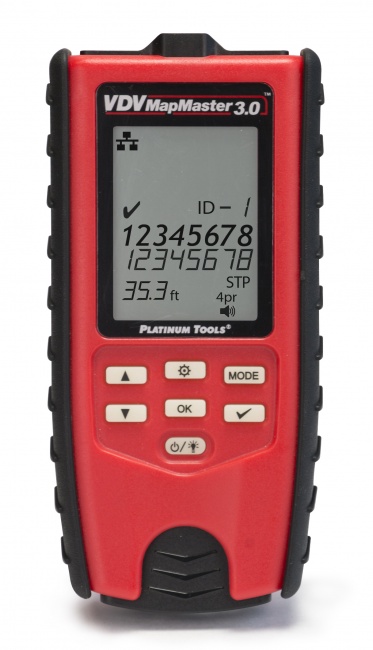
- VDV MapMaster 3.0 with main and remote units
- Cable ID remotes (1-19) if testing many runs in one session
- Digital Tone Probe for finding cable ends in unfinished framing
- Permanent marker and labels for marking cable ends
Test procedure (per cable)
Step 1: Find both ends. The head end (at the structured wiring panel location, typically a basement closet or utility room). The room end (stubbed through the wall plate location in the room).
Step 2: Strip and prepare for testing. Strip 4-6 inches of jacket at each end. Untwist the pairs. You do not need to terminate to a jack for this test -- you can connect bare conductors to the tester's RJ45 jaws or use a punchdown adapter.
Step 3: Connect the tester. Main unit at one end, remote at the other. The MapMaster 3.0 reports wiremap, identifies the cable by ID number if you used numbered remotes, and reports basic continuity.
Step 4: Verify pass. All 8 conductors show connected. No opens, no shorts. If a cable fails, it is much faster to re-pull now than after drywall.
Step 5: Re-bundle and tag. Fold the cable ends back, wrap them with electrical tape to prevent damage, and label clearly. Coil any excess cable inside the wall stub or at the head end.
What to document
Cable schedule with each drop number, room location, head-end position in the panel, and pass/fail result. Photo of the head-end bundle showing all cables present and labeled. Note any cables that needed re-pulling.
Defects Found at Pre-Drywall Testing
Even careful pull crews introduce defects. Common pre-drywall failures and their root causes:
Open conductor
Almost always a damaged cable somewhere in the run. Cause: cable pulled through a sharp burr in a stud hole, cable kinked during pull, cable pulled too aggressively breaking a conductor inside the jacket. Solution: re-pull the affected cable now, before drywall.
Shorted conductors
Two conductors connected together. Cause: cable jacket damaged at a pinch point, exposing copper that contacts another conductor. Solution: identify damage location with TDR if possible, or just re-pull.
Wrong cable at wrong location
The drop you pulled to the master bedroom is showing up at the kitchen test point. Cause: cable swap during pull. Solution: re-label both ends, update your schedule.
Missing cable
Cable schedule shows a drop that no test point reports. Cause: cable head end not pulled to the panel location, or cable lost during pull. Solution: trace the run with tone generator to find what happened.
Test #2: The Trim-Out Test
Run this test after termination but before final client walk-through.
Equipment needed
- Cable tester (VDV MapMaster 3.0)
- A rented qualifier if the client wants Gigabit verification; CableTestShop does not list one
- Patch cords for connecting to the patch panel
Test procedure (per drop)
Step 1: Wiremap. Connect main unit at the patch panel port and remote at the keystone jack. Verify all 8 conductors connected per T568B.
Step 2: Length. Confirm length is reasonable (typically 50-200 feet for residential). Significant differences from your pre-drywall measurements suggest damage.
Step 3: Speed (optional). If the client paid for "Gigabit ready" certification, this step needs a speed qualifier and we do not currently list one, so plan it as a rental or subcontract before you quote it.
Step 4: Document. Pass/fail, length, speed result. Photo of the patch panel.
Equipment by Project Size
| Project | Drops | Recommended Kit | Test Time (both rounds) |
|---|---|---|---|
| Small remodel | 5-15 | MapMaster 3.0 + Tone Probe | 1-2 hr total |
| Standard new build | 15-30 | MapMaster 3.0 + Tone Probe | 3-5 hr total |
| Custom home | 30-60 | Add LanSeeker for cable ID at scale | 6-10 hr total |
| Estate / multi-suite | 60-150 | Full kit + spare reference cords + extra remotes | 12-24 hr total |
Documentation That Protects You
The single best protection against billing disputes and remediation arguments is documented test results from both rounds of testing. Specifically:
Pre-drywall test report
Cable schedule with pass/fail by drop number, dated and signed (by you or your tech). Photos of the head-end panel area showing all cables present and labeled. This proves every cable was good when you left the prewire stage.
Trim-out test report
Cable schedule with pass/fail and (optionally) speed test results. Photos of the finished patch panel and any unusual installations. Pass results confirm the network is operational at handoff.
The combined record
If a cable is found bad during trim-out that passed pre-drywall, you have documented proof that another trade damaged it during construction. The damage is the GC's responsibility (or the responsible trade's), not yours. Without the pre-drywall test, the bad cable is your problem regardless of cause.
For an overview of low-volume testing approaches, see our small office certification checklist. For ROI math on tester investment, see our tester ROI guide.
Pro Tips From Field Experience
Always test on Friday before a Monday drywall start
Drywall crews often work Mondays. Testing on Friday gives you the weekend to re-pull anything that failed without delaying construction.
Coil extra cable in stud bays, not in the wall plate
Service loops belong in framing where you can access them later if needed. Cable jammed into a wall plate enclosure is hard to work with at trim-out.
Use the same color cable jackets across the project
Mixed jackets (blue Cat6 from one box, white Cat6 from another) make cable identification harder if labels fall off. Stay with one color per project.
Photograph the head end in detail
A photo showing every cable bundled and labeled at the panel location is invaluable months later when a different tech is doing the trim-out and asking which cable is which.
Bring spare keystone jacks to trim-out
Some cables will be marginally too short to terminate cleanly. A few spare jacks let you re-terminate with less cable rather than re-pulling.
Frequently Asked Questions
Should I test cables during prewire or wait until trim out?
Test BEFORE drywall. The point is catching damage while cables are still accessible. Damaged cables found post-drywall require fishing new runs -- much more expensive than re-pulling pre-drywall.
What can damage cables between prewire and trim out?
Drywall screws (most common), HVAC and plumbing trades cutting cables, drywall mud pulling on jackets, insulation crews compressing cables, and trim carpenters with finish nails.
How do I label cables during prewire when there are no jacks yet?
Cable ID tags or paper labels at both ends, permanent marker on the jacket as backup. Photograph the cable schedule. Use a tone generator as backup if labels fall off.
What test equipment do I need for residential prewire?
Minimum: VDV MapMaster 3.0 for continuity and wiremap, plus a tone generator. For higher-end work, Gigabit speed verification at trim-out needs a qualifier, which is a rental: CableTestShop does not list one.
Build Your Residential Prewire Kit
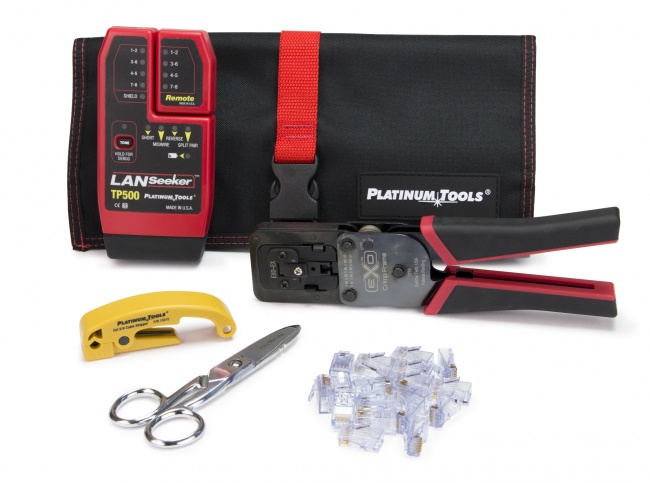
The instruments that test pre-drywall and at trim-out, with the documentation that protects your business. We do not sell a bundled kit, so a prewire kit is assembled from the pieces.