The Brand Positioning
Klein Tools is the dominant brand in electrical hand tools and tradesman-tier electronic test gear. They are sold at every Home Depot and Lowe's, every electrical supply house, and on the trucks of every union electrician in North America. Klein's cable testing line is an extension of that strategy: well-built tools at accessible price points, designed for trades professionals who need reliable wiremap and basic continuity testing as part of a broader electrical workflow.
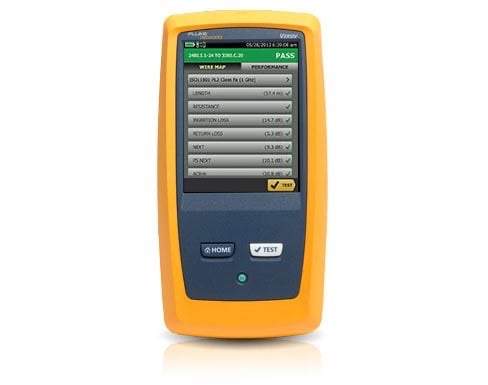
Fluke Networks targets a different buyer: the structured cabling specialist whose entire business is voice/data/video installation and certification. Fluke's testers are premium-priced precision instruments designed for specialists who test dozens or hundreds of cables daily. The DSX certifier, the LinkIQ qualifier, the MicroScanner field tester -- all are designed for technicians who are buying their primary work tools, not occasional verification gear.
The two brands rarely compete head-to-head because they aim at different buyers. They overlap meaningfully in only one category: basic wiremap testers around $100-$400. Outside that overlap, you are usually choosing between Klein for one job and Fluke for a different job rather than choosing between them for the same job.
Product Line Overview
| Category | Klein Tools | Fluke Networks |
|---|---|---|
| Basic wiremap tester | VDV Scout Pro 3, VDV501-098 | MicroScanner 2 |
| Tone generator and probe | VDV500-820, VDV500-705 | IntelliTone Pro 200 |
| PoE tester | VDV512-101 (basic detection) | MicroScanner PoE, LinkIQ |
| Cable qualifier | None | LinkIQ |
| Network analyzer | None | LinkIQ |
| Cable certifier (copper) | None | DSX2-5000, DSX2-8000 |
| Fiber tester | VDV512-101 (visual fault locator only) | CertiFiber Pro, OptiFiber Pro |
| Hand tools / strippers | Extensive market-leading line | Limited specialty tools only |
| Distribution | Mass-market: Home Depot, Lowe's, supply houses | Specialty: low-voltage and pro distributors |
| Typical price range | $30 - $300 | $200 - $15,000 |
| Warranty (testers) | Limited lifetime on most models | 1 year standard |
The Overlap: Basic Wiremap Testers
Where Klein and Fluke actually compete is the basic wiremap tester category. The Klein VDV Scout Pro 3 (around $130-$170) and the Fluke MicroScanner 2 (around $370-$480 in kit form) both do the same core job: continuity, wiremap, length measurement, tone generation, and basic cable verification.
Where the MicroScanner pulls ahead
The MicroScanner has a more refined feel: better build, more responsive buttons, slightly better TDR length accuracy, and a clearer interface. It is drop-rated to 6.5 feet and has held up well across years of fieldwork in shops we have talked to. Its brand recognition on commercial job sites is universal. For a structured-cabling specialist using the tester dozens of times daily, the premium feel is meaningful.
Where the VDV Scout Pro 3 is competitive
At one-third the price, the Klein VDV Scout Pro 3 delivers the same core wiremap, length, tone, and continuity capability. The display is clear, the menu is simple, and Klein's lifetime warranty backs the unit for as long as you own it. For an electrician who installs cable as part of a broader trade and verifies cables occasionally, the VDV Scout Pro is a sensible primary tester. For a structured-cabling specialist, it works as a backup unit in the truck or a loaner for an apprentice.
What you give up with Klein
Klein testers do not integrate with any cloud reporting platform. There is no equivalent to Fluke's LinkWare Live for tracking project results. There is no qualifier-level Ethernet validation. There is no certifier-grade frequency-based testing. Klein testers do their job and stop there. For a contractor whose work requires anything beyond pass/fail wiremap verification, Klein is not the answer.
Where Fluke Wins (No Klein Equivalent)
Cable certification
Klein does not make a TIA/ISO cable certifier. If your contracts require certification documentation for Cat6, Cat6A, or Cat8, you are buying a Fluke DSX or a Softing WireXpert -- Klein is not in this conversation. Certification testing requires Level V accuracy, frequency-based parameter measurement, and a calibrated reference. Klein's hardware is not designed for this category.
Qualification-level Ethernet validation
The Fluke LinkIQ validates Ethernet link speed up to 1 Gbps, identifies cable category (Cat5e/Cat6/Cat6A), and combines cable testing with network analysis. Klein offers no comparable tool. For contractors who need to verify the cable supports the required Ethernet speed without buying a full certifier, the LinkIQ is a category Klein does not enter.
Modular Versiv platform
Fluke's Versiv platform consolidates copper certification, fiber OLTS, fiber OTDR, and Wi-Fi analysis on one mainframe with swappable modules. Klein has no platform offering -- their testers are standalone single-purpose tools. For shops doing mixed-media certification work, the Versiv platform's consolidation is a real advantage.
Network analyzer depth
The LinkIQ tests link speed, PoE class and voltage, VLAN membership, DHCP response, and CDP/LLDP neighbor info. Klein's basic PoE detector verifies PoE presence but does not provide the deeper network diagnostics. For network technicians who need to troubleshoot live network connectivity, Klein does not offer a competitive tool.
Where Klein Wins (No Direct Fluke Equivalent)
Hand tool integration
Klein's strength is the integrated tool bag. A Klein cable tester sits next to Klein wire strippers, Klein punchdown tools, Klein crimpers, and Klein's broad electrical tool line. For an electrician or low-voltage tech who is already deeply standardized on Klein, adding a Klein cable tester keeps the tool kit consistent. Fluke does not offer hand tools at the same depth.
Mass-market distribution
You can buy a Klein tester at Home Depot tonight. Fluke testers are stocked at specialty distributors and require online ordering for most contractors. For a tradesman who realizes mid-job that they need a cable tester, the ability to drive to a big-box store and have one in hand within an hour is a real advantage.
Lifetime warranty
Klein's limited lifetime warranty backs most testers and hand tools for the life of the original purchaser. Fluke's standard warranty is 1 year. For tools that live in a tool bag for 5-10+ years, the warranty difference is meaningful, even with the typical fine print on lifetime warranty terms.
Lower replacement cost
Losing or breaking a $130 Klein tester is a different financial event than losing a $400 MicroScanner. For tradesmen who occasionally lend testers to apprentices, leave them on job sites, or work in environments where tool damage is common, the lower replacement cost reduces operational risk.
The Decision Framework
For shops that do both general electrical work and structured cabling, owning Klein hand tools and basic testers alongside a Fluke certifier is the typical pattern. Klein for the day-to-day, Fluke for the certification jobs. The brands are complementary far more often than competitive.
The Middle Ground
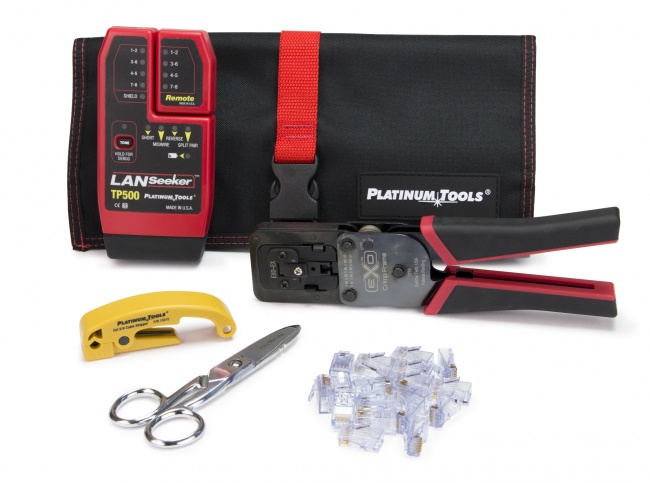
Between Klein's tradesman tier and Fluke's specialist tier sits Platinum Tools, whose VDV MapMaster 3.0 targets the structured cabling buyer who wants better build quality than Klein at a lower price than Fluke. The MapMaster offers numbered ID remotes, a color display, and limited lifetime warranty in the $180-$260 range -- bridging the gap between the Klein VDV Scout Pro and the Fluke MicroScanner.
For gigabit qualification-level testing without paying full certifier prices, that is a speed qualifier's job and we do not currently list one, so it is a rental or subcontract step. For cable identification, the LANSeeker handles patch panel mapping. For tone work, the Digital Tone Probe handles cable identification cleanly.
For more brand comparisons, see Fluke vs NetAlly and Ideal vs Fluke.
Three Use Case Walkthroughs
Abstract feature comparisons are useful but specific use cases are clearer. Here are three contractor profiles and which brand makes more sense for each.
The residential electrician adding low-voltage work
An electrical contractor whose primary business is residential rough-in and finish electrical, occasionally pulling Cat6 for a customer who wants structured wiring as part of the build. Cable testing happens maybe 10-20 times per month, mostly verifying terminations on small jobs. Tool bag is heavily standardized on Klein.
For this contractor, the Klein VDV Scout Pro 3 is the right answer. It costs $130, handles wiremap and length, and lives in a Klein-organized tool bag with the rest of the kit. Buying a $400 Fluke MicroScanner makes no sense for this volume of testing. The MicroScanner's premium feel does not translate to value for occasional users.
The structured cabling specialist
A low-voltage contractor whose primary business is voice/data/video installation. Crews terminate hundreds of cables weekly and test every one. Some contracts require TIA/ISO certification documentation; some do not. Service calls come in regularly for troubleshooting existing installations.
For this contractor, Klein is not the answer at all. The structured cabling specialist needs a Fluke MicroScanner (or Platinum VDV MapMaster) for daily field testing, a Fluke LinkIQ or NetAlly LinkRunner for active network testing, and a DSX certifier for certification jobs. Klein hand testers do not have the durability for daily heavy use, the feature depth for qualification work, or the certification capability for compliance reporting. Klein may have a place in the truck for the apprentice's basic verifier, but the primary tester investment goes to specialist brands.
The MSP or IT integrator
A managed service provider technician whose work centers on troubleshooting client networks, deploying access points, and verifying connectivity. Cable testing is occasional rather than daily. The primary need is active network analysis: link speeds, PoE, VLANs, DHCP.
For this contractor, neither Klein nor Fluke leads cleanly. The right tool is more likely a NetAlly LinkRunner 10G or EtherScope nXG -- network analyzers built for this exact use case. Klein's basic testers do not provide the diagnostic depth needed; Fluke's LinkIQ is competitive but the LinkRunner 10G goes deeper. See our LinkIQ vs LinkRunner comparison for this scenario.
The Honest Take on Klein for Cable Testing
Klein Tools does many things very well. Hand tools, electrical strippers, fish tape, screwdrivers -- Klein dominates these categories for good reason. The cable testing line is not the same kind of product. It is a competent but not class-leading offering in a category where specialists pull ahead.
This is not a criticism of Klein. The brand has made deliberate choices about where to compete and where not to. Klein's strategic position is the tradesman's complete tool kit, not the structured-cabling specialist's primary work tools. Klein cable testers exist to round out the Klein ecosystem for tradesmen who need basic cable verification as a small part of broader electrical work.
If you are a structured cabling specialist evaluating Klein vs Fluke for your primary tester investment, Fluke is the right answer. If you are a tradesman who needs occasional cable verification as part of a Klein-based tool kit, Klein is the right answer. Both can be true at the same time. The question is which kind of contractor you are.
Frequently Asked Questions
Are Klein cable testers as accurate as Fluke?
For wiremap and continuity, yes. The Klein VDV Scout Pro accurately identifies opens, shorts, miswires, and split pairs. Fluke pulls ahead in tools that go beyond wiremap -- TDR length precision, qualifier-grade Ethernet validation, and TIA/ISO certification. Within the basic wiremap category, Klein is accurate enough.
Why are Klein testers cheaper?
Klein targets the tradesman market with mass distribution and value-tier pricing. Fluke targets structured-cabling specialists with premium-priced precision instruments. The price gap reflects target buyer and feature scope rather than raw quality differences in the wiremap category.
Can a Klein tester replace a Fluke MicroScanner?
For occasional wiremap work or as a backup tester, yes. The Klein VDV Scout Pro 3 covers the same core function at one-third the price. For a professional doing dozens of tests daily, the MicroScanner's build quality and feel justify the price gap over time.
Does Klein make a cable certifier?
No. Klein does not currently offer a TIA/ISO cable certifier. For certification work you need Fluke (DSX), Softing (WireXpert), or Trend Networks (LANTEK). Klein's cable testing line tops out at wiremap testers and basic PoE detectors.
Klein's Cable Testing Lineup in Detail
Klein's cable testing line is broader than many contractors realize. Knowing what is in the catalog helps you pick the right Klein tool when Klein is the right brand answer.
Klein VDV Scout Pro 3
Klein's flagship cable tester. Wiremap, length, tone, distance to fault, and remote ID identification with up to 19 remotes available in the Tester Kit. The Scout Pro 3 sits at the top of Klein's tester line and competes most directly with the MicroScanner and the VDV MapMaster 3.0. For Klein-loyal shops, this is the right Klein answer for serious cable verification work.
Klein VDV501-098
A simpler, lower-cost cable tester focused on continuity and basic wiremap. Good for rough verification but lacks the length and remote ID capabilities of the Scout Pro 3. Useful as a truck spare or apprentice tool.
Klein VDV512-101 (PoE detector)
Basic PoE presence detector with simple class identification. Not a load tester, not a network analyzer -- just a quick way to check whether a port has PoE before plugging in a device. Useful as a small addition to a tool bag rather than a primary tester.
Klein VDV500-820 / VDV500-705 (tone and probe)
Klein's tone generator and inductive probe set. Solid tradesman-tier tone work for cable identification. Competes with the Fluke IntelliTone Pro 200 at a lower price point. For pure tone work, Klein's offering is competitive.
Klein VDV770 series (compression connector tools)
Hand tools for terminating coax compression connectors. Not testers but commonly purchased alongside Klein cable testers as part of the broader low-voltage tool kit Klein assembles.
Fluke's Cable Testing Lineup in Detail
For comparison, the Fluke Networks portfolio is structured very differently. Fluke targets specific testing levels with focused tools at each price point.
Fluke MicroScanner 2
Field cable tester for wiremap, length, and tone. Direct competitor to the Klein VDV Scout Pro 3 at roughly 2-3x the price. The MicroScanner is the structured cabling specialist's daily-driver field tester for installations that do not require certification.
Fluke MicroScanner PoE
Variant of the MicroScanner that adds PoE detection. Bridges between basic field testing and PoE-aware verification. Useful for installers who need PoE presence checking integrated with their primary cable tester.
Fluke LinkIQ / LinkIQ Duo
Cable performance qualifier and network analyzer combined. Tests cable category up to Cat6A and validates network connectivity. The LinkIQ Duo includes two units for two-person crews. Klein has no equivalent.
Fluke DSX2-5000 / DSX2-8000 (Versiv 2 platform)
Full TIA/ISO certifiers. The DSX2-5000 covers Cat5e through Cat6A; the DSX2-8000 adds Cat8 capability. The certifier tier of cable testing where Klein does not compete at all.
Fluke CertiFiber Pro / OptiFiber Pro
Fiber testing modules for the Versiv 2 platform. CertiFiber Pro for OLTS loss testing; OptiFiber Pro for OTDR fault location. Klein does not make fiber testers beyond a basic visual fault locator.
More Brand Comparisons in This Series
The Klein vs Fluke question covers the tradesman-to-specialist spectrum. Two other comparisons address the adjacent decisions contractors face when building out a complete testing toolkit.
- Ideal vs Fluke Cable Testers covers the mid-market decision where Ideal's value pricing on qualifiers and verifiers competes with Fluke's certifier ecosystem -- a more nuanced comparison than Klein vs Fluke because the brands actually overlap on some products.
- Fluke DSX 5000 vs DSX 8000 is the next question after you've decided Fluke is the right brand for your certification work: whether the DSX2-8000's 2000 MHz Cat8 range justifies the substantial price premium over the DSX2-5000.
Still Not Sure Which Tester Fits Your Work?
Tell us what you test — occasional wiremap, daily field verification, or full TIA/ISO certification — and we'll point you to the right Klein, Fluke, or middle-ground unit for your budget. No upsell, just the tester that matches the job.
Prefer to browse? Our catalog runs from basic wiremap testers up to quote-only certifiers.