The Brand Split: A Brief History
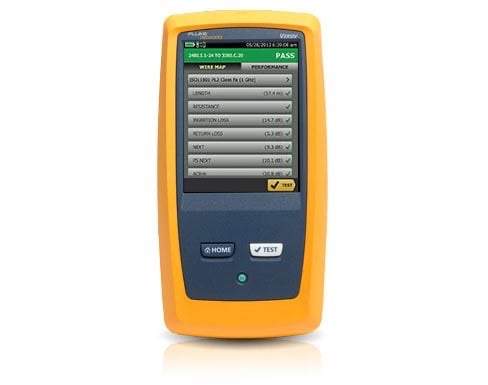
For decades, Fluke Networks was a single business unit inside Fluke Corporation, building cable certifiers, network analyzers, and Wi-Fi tools under one roof. In 2019, the network analyzer line was spun off as a separate company called NetAlly. The split was clean: Fluke Networks kept the cable certification business (DSX, Versiv platform, LinkIQ qualifier) and NetAlly took the handheld network analyzer line (LinkRunner, OneTouch AT, AirCheck, EtherScope).
The two companies now operate independently. They no longer share software platforms, cloud reporting, or product roadmaps. They compete in some product categories (network analyzers in particular) and complement each other in others (cable certification plus deeper network diagnostics). Many established contractors own equipment from both brands, simply because the best tool for each job often lives in a different catalog now.
For a contractor evaluating a new equipment investment in 2026, understanding the split matters. Buying a Fluke DSX certifier and a NetAlly LinkRunner means managing two cloud reporting platforms, two software workflows, and two service relationships. Standardizing on one brand simplifies operations but may force compromises on specific tools.
Product Line Overview
Each brand has a distinct portfolio strategy. Fluke focuses on certification accuracy, ecosystem integration, and the Versiv modular platform. NetAlly focuses on handheld network diagnostics, Android-based interfaces, and depth of network-layer testing.
| Category | Fluke Networks | NetAlly |
|---|---|---|
| Copper certification | DSX2-5000, DSX2-8000 (Versiv) | None (exited category at split) |
| Fiber certification | CertiFiber Pro, OptiFiber Pro | None |
| Cable qualifier | LinkIQ, LinkIQ Duo | None (exited at split) |
| Network analyzer (1G) | LinkIQ | LinkRunner AT |
| Network analyzer (10G) | None | LinkRunner 10G, EtherScope nXG |
| Wi-Fi analyzer | AirCheck (legacy) | AirCheck G3, EtherScope nXG |
| Cable tester / wiremap | MicroScanner | LinkSprinter, LinkRunner AT |
| Cloud reporting | LinkWare Live | Link-Live |
| Operating philosophy | Proprietary firmware, modular hardware | Android-based, software-defined |
| Typical price range | $200 - $15,000 per tool | $300 - $20,000 per tool |
| Annual calibration | Required for certifiers | Not required for most tools |
| Service network | Largest in industry | Smaller but capable |
Where Fluke Wins
Cable certification
If your work requires TIA-568 or ISO 11801 certification documentation, the conversation starts and ends with Fluke. The DSX2-5000 and DSX2-8000 are the industry default certifiers in North America. Most commercial general contractors and consulting engineers expect to see a DSX on site. Cable manufacturers reference Fluke results in their warranty registration documentation. NetAlly does not currently make a copper or fiber certifier, so this is not a head-to-head comparison -- it is Fluke or it is a different brand entirely (Softing, AEM).
The Versiv platform
Fluke's modular Versiv platform lets one mainframe support copper certification, fiber OLTS, fiber OTDR, and Wi-Fi analysis through swappable modules. For a contractor who does mixed-media work, this consolidation is a real operational advantage: one platform means one user interface, one cloud reporting account, and one service relationship. NetAlly's tools are standalone instruments that do not share modular components.
LinkWare Live ecosystem
Fluke's LinkWare Live cloud platform is the most mature certification reporting system in the industry. It tracks projects across multiple testers, generates professional certification reports, integrates with project management tools, and provides centralized visibility for shops with multiple crews. Link-Live is competitive but does not match LinkWare Live's depth on certification project management. For an operation that runs 5-50 crews simultaneously, LinkWare Live is a meaningful productivity advantage.
Brand recognition and acceptance
On commercial job sites, the DSX is the tester general contractors and inspectors recognize on sight. This brand recognition has real operational value: it removes friction during acceptance testing, eliminates "is that tester approved?" conversations, and signals professionalism to customers. NetAlly is well known among network technicians but does not carry the same instant recognition with low-voltage GCs.
Where NetAlly Wins
Handheld network analysis depth
For active network troubleshooting, NetAlly tools go deeper than Fluke's. The LinkRunner 10G validates link negotiation up to 10 Gbps and provides full network-layer diagnostics: VLAN discovery (multiple VLANs, tagged and untagged), DHCP analysis with lease and option parsing, CDP/LLDP/EDP neighbor discovery with management IP, traceroute, ping, and DNS lookup. The EtherScope nXG adds packet capture, protocol analysis, and deeper performance testing. Fluke's LinkIQ does network testing but at a noticeably lower depth.
10G speed validation
NetAlly is the only major handheld brand with a tool that negotiates 10GBASE-T speeds for verification testing. As Cat6A installations and 10G-capable switches become standard for new commercial construction, this capability is increasingly relevant. Fluke does not currently offer a 10G handheld validator -- the LinkIQ tops out at 1 Gbps negotiated link speed.
Android OS and touchscreen UX
NetAlly's higher-end tools (LinkRunner 10G, EtherScope nXG, AirCheck G3) run a customized Android operating system on color touchscreens. The interface adapts quickly for technicians familiar with smartphones, and the platform supports software updates that add new test capabilities without hardware changes. Fluke's proprietary firmware on the LinkIQ is functional but more limited in navigation flexibility.
Wi-Fi analysis
NetAlly's AirCheck G3 is the strongest dedicated handheld Wi-Fi analyzer on the market, with deep capabilities for survey, troubleshooting, and rogue AP detection. The EtherScope nXG combines wired and wireless analysis in one tool. Fluke's AirCheck legacy product is no longer competitive; the modern Wi-Fi analyzer category belongs to NetAlly.
PoE load testing
NetAlly's analyzers apply actual loads to PoE ports to verify the PSE delivers claimed wattage, including 802.3bt Type 4 (90W). Fluke's LinkIQ detects PoE class and voltage but does not load-test wattage delivery. For installers working with high-draw PoE devices (PTZ cameras, video displays, multi-radio APs), NetAlly's load testing catches problems Fluke's tools miss.
The Real Decision Framework
Choose Fluke if your work centers on cable installation
If you install structured cabling and your contracts require TIA/ISO certification, Fluke is the foundation. Build around the DSX certifier as the anchor purchase, then add Fluke's network analyzers and qualifiers as needed. The unified LinkWare Live reporting and Versiv modular platform deliver real operational efficiency for a cable-installation-focused business.
Choose NetAlly if your work centers on network troubleshooting
If you spend more time with a laptop than a punchdown tool -- MSP technicians, network engineers, IT integrators, data center installers -- NetAlly is the stronger anchor brand. Build around the LinkRunner 10G or EtherScope nXG and add the AirCheck G3 for wireless work. The Android-based interface, deeper network diagnostics, and 10G validation address the problems you actually solve daily.
Mix both brands when the job demands it
Many established shops own DSX certifiers from Fluke and LinkRunner analyzers from NetAlly. The two brands are complementary rather than directly competitive in most categories. The trade-off is managing two cloud platforms (LinkWare Live and Link-Live) and two service relationships. For shops large enough to absorb that overhead, picking the best tool in each category often beats forcing brand uniformity.
When Neither Brand Is the Right Answer
Fluke and NetAlly both target the high end of the test equipment market. For contractors whose work does not justify $4,000-$15,000 instruments, there are credible alternatives.
For basic wiremap and continuity testing, the VDV MapMaster 3.0 and LANSeeker deliver the core cable verification features at a fraction of the cost. Gigabit throughput verification without formal certification is a speed qualifier's job, and that tier is a rental or subcontract step rather than something we stock. For tone-and-trace work, the Digital Tone Probe handles cable identification with no need to buy into the Fluke or NetAlly ecosystems.
The Fluke and NetAlly comparison matters most when you are spending $2,000+ on a single instrument. For lower-cost tools, the brand decision matters less than picking the right capability level for the job. See our guide on the best cable testers of 2026 for a broader view across price tiers.
Total Cost of Ownership
Comparing sticker prices across brands misses the true cost picture. Calibration requirements, software subscriptions, and service costs all factor into 5-year ownership.
Fluke certifiers (DSX) require annual factory calibration at $300-$500 per unit. Over 5 years, that is $1,500-$2,500 per certifier added to the original purchase price. LinkWare Live is included with the certifier purchase. Service turnaround is fast (1-2 weeks typical) due to Fluke's large authorized service network.
NetAlly handheld analyzers do not require annual calibration since they do not measure against fixed accuracy standards. Link-Live cloud reporting is included. Some advanced features (extended warranty, premium support, additional analysis modes) are subscription-priced. Service turnaround is comparable to Fluke for in-warranty units; out-of-warranty repairs may take slightly longer due to NetAlly's smaller service footprint.
Fluke certifiers also hold their value better on the used market. A 3-year-old DSX in calibration typically resells for 55-65% of new price. NetAlly handhelds resell for 40-50% of new price at the same age. If you upgrade equipment every 5-7 years, the higher resale value on Fluke certifiers offsets some of the higher upfront cost.
Software Ecosystem: LinkWare Live vs Link-Live
One of the most underweighted decision factors in choosing between Fluke and NetAlly is the cloud reporting platform. Test results are not deliverables until they are organized, formatted, and handed to the customer. Both brands have invested heavily in cloud platforms, but they have made different design choices.
Fluke LinkWare Live
LinkWare Live is built around the certification project as the unit of work. Projects organize tests by site, by job, and by tester. Multiple crews can sync results from multiple DSX certifiers and LinkIQ analyzers into one project. Project managers see a dashboard of certification progress, pass/fail rates, and exception lists. PDF certification reports generate from the cloud with consistent formatting across all testers in the fleet. The platform's depth on certification project management is unmatched.
The trade-off: LinkWare Live's interface assumes you are doing certification work. The workflow optimizes for "this site has 500 cable drops and we need to certify all of them." For shops doing simpler verification work, the platform can feel heavy.
NetAlly Link-Live
Link-Live is built around the test result as the unit of work. Individual test results upload from the LinkRunner or EtherScope and accumulate in a chronological feed organized by site and by technician. Reports generate per-test or per-site. The platform is simpler and more flexible than LinkWare Live but less structured for certification project management.
The trade-off: Link-Live does not natively organize work into the certification-style project structure that GCs and consultants often request. For network troubleshooting documentation -- the typical use case for NetAlly's tools -- it is well-suited. For formal certification reporting, it is not the right platform.
Cross-platform compatibility
The two platforms do not exchange data. If you have crews using both Fluke and NetAlly tools, you manage results in two separate cloud systems with two logins and two reporting formats. Customers who request "all your test data in one report" require manual consolidation. This is a real operational cost that is easy to underweight when comparing tools by feature lists.
Service, Calibration, and Long-Term Support
Test equipment lives in your business for 5-10+ years. Service responsiveness, calibration availability, and long-term firmware support all factor into the total ownership picture.
Calibration requirements
Fluke certifiers require annual factory calibration to maintain Level V accuracy compliance. The standard cycle is one year, with calibration costing $300-$500 per unit. Failing to calibrate annually does not break the tester, but it invalidates compliance for certification work. For active service, plan on $600-$1,000 per year per pair of testers.
NetAlly handheld analyzers do not require annual calibration because they do not measure against fixed accuracy standards. They test active network connections rather than producing measurement-based certification reports. Some shops calibrate them voluntarily every 2-3 years; most do not calibrate at all. The total ownership cost is correspondingly lower.
Service network
Fluke Networks operates the largest authorized service network in the certification tester market. Repair turnaround averages 1-2 weeks for in-warranty units and 2-4 weeks for out-of-warranty repairs. Multiple authorized service centers across North America keep shipping costs and turnaround times reasonable.
NetAlly's service network is smaller but capable. In-warranty repair turnaround is comparable to Fluke (1-2 weeks). Out-of-warranty repairs may take slightly longer due to the smaller authorized service footprint, particularly for advanced products like the EtherScope nXG.
Firmware and feature updates
Both brands actively support their current product lines with firmware updates. Fluke's roadmap focuses on certification standard support (Cat8 added to DSX2-8000, ISO 11801-1:2017 compliance, etc.) and LinkWare Live platform improvements. NetAlly's roadmap focuses on network protocol coverage (IPv6, new VLAN tagging variants, expanded PoE testing for 802.3bt) and Android-based tool feature additions.
Older Fluke Versiv 1 platforms continue to receive support but new features ship to Versiv 2 first. Older NetAlly LinkRunner AT models continue to receive critical updates but new features go to the LinkRunner 10G and EtherScope.
Frequently Asked Questions
Is Fluke or NetAlly better for cable testing?
It depends on what you mean by cable testing. For TIA/ISO certification, Fluke is dominant -- NetAlly does not make a certifier. For active network analysis (link speed, PoE, VLAN, DHCP), NetAlly's LinkRunner family goes deeper than Fluke's LinkIQ. For pure wiremap, both make capable tools, but lower-cost options like the VDV MapMaster 3.0 often beat both on price.
Did NetAlly used to be part of Fluke?
Yes. NetAlly was spun off from Fluke Networks in 2019. The product lines that became NetAlly include LinkRunner, OneTouch AT, AirCheck, and EtherScope. Fluke retained the cable certification line (DSX, Versiv) and the LinkIQ qualifier. The two brands no longer share platforms or cloud reporting.
Are Fluke and NetAlly cloud platforms compatible?
No. Fluke uses LinkWare Live for DSX certifiers and LinkIQ analyzers. NetAlly uses Link-Live for the LinkRunner family and EtherScope. The platforms do not exchange data. If you mix tools across brands, you manage reports in two separate cloud systems.
Which brand has better resale value?
Fluke certifiers hold value better than NetAlly handhelds. A used DSX in calibration typically sells for 55-65% of new price at 3 years; NetAlly tools tend to depreciate to 40-50% in the same period. The DSX's strong installed base and broad technician familiarity sustain demand on the used market.
Buying Strategy by Shop Size
The right brand mix changes as your operation grows. Here is how to think about Fluke vs NetAlly investment at different scales.
Solo or two-person operation
One primary tester, occasional secondary. Pick one brand and stick with it. The cloud platform consolidation matters more than feature optimization at this scale. If your work touches certification, that means Fluke (DSX or just LinkIQ as a starter). If your work centers on network troubleshooting, that means NetAlly (LinkRunner 10G).
Small shop (5-15 techs)
Multiple testers in the field, typically managed centrally. The unified cloud platform argument gets stronger -- managing test results across both LinkWare Live and Link-Live for 10+ technicians is real overhead. Pick a primary brand and supplement with the second only when the secondary brand has a tool the primary brand cannot match (e.g., a Fluke shop adding a NetAlly LinkRunner 10G for the dedicated network specialist).
Mid-sized contractor (15-50 techs)
The trade-offs change. At this scale, specialization within the workforce starts to matter. Install crews use one set of tools; service techs use another; certification specialists use a third. Owning equipment from both brands and managing two cloud platforms is the cost of optimization. The ROI on picking the best tool for each role generally exceeds the operational cost of the brand split.
Large contractor or national operation
Standardization typically wins again at very large scale, but for different reasons. Training programs, internal documentation, parts inventory, and service contracts all benefit from brand consistency. Most very large contractors standardize primarily on Fluke for the certification ecosystem and supplement with NetAlly only where Fluke has no equivalent (high-end network analysis and Wi-Fi work).
Related Brand Comparisons
For deeper dives into specific product matchups, see:
- Fluke LinkIQ vs NetAlly LinkRunner 10G -- the closest direct head-to-head between the two brands
- Fluke DSX vs Softing WireXpert -- the certifier-tier comparison
- Klein vs Fluke Cable Testers -- tradesman vs specialist
- Ideal vs Fluke Cable Testers -- another value-tier comparison
- Best Cable Testers of 2026 -- broader market view
Future Roadmaps and Standards Roadmap Risk
Buying decisions today should account for where each platform is heading.
Fluke Networks Roadmap
Fluke continues to invest in the Versiv platform with periodic firmware updates that add support for emerging cable categories. Cat 8 / Class I and II support is mature on the DSX-8000, and current signaling suggests continued evolution toward higher-frequency single-pair Ethernet certification for industrial applications. The Versiv platform's modular architecture means firmware-driven feature additions are possible without mainframe replacement for many use cases.
NetAlly Roadmap
NetAlly has pushed aggressively into the wireless analysis space with EtherScope nXG and AirMagnet evolution. Their roadmap signals continued investment in WiFi 6E, WiFi 7, and 5G coverage analysis, with structured cable testing remaining a feature but not the primary investment area. If your work is shifting toward wireless-heavy environments, NetAlly's trajectory may be more aligned with your future needs.
What This Means for a 5-Year Purchase Decision
Test equipment is typically owned for 5-10 years before replacement. Buying decisions today should consider where each brand is investing. If your work mix is shifting toward wireless and network analysis, NetAlly is investing where you're going. If your work mix is structured cabling certification with standards-driven warranty work, Fluke is investing where you're going.
The Mixed-Brand Approach
Many established contractors run both brands depending on the use case.
Fluke for Certification, NetAlly for Network Validation
This is the most common dual-brand pattern. Fluke Versiv handles all warranty-required certification work where LinkWare reports must be submitted. NetAlly LinkRunner or EtherScope handles network commissioning, troubleshooting, and wireless analysis. The two platforms complement each other rather than overlap.
Capital Allocation Across Both
The hybrid approach typically requires more capital than going single-brand but provides better tool-to-task fit. A reasonable starter dual-brand setup might include one Versiv 2 / DSX-8000 plus one EtherScope nXG, totaling roughly $30,000-$40,000 depending on configuration. This covers both certification and network analysis without compromise on either side.
Training Considerations
Technicians need training on both platforms if both are deployed. Fluke and NetAlly each offer manufacturer training programs, and BICSI certifications cover both ecosystems. Plan for 2-3 days of dedicated training per technician to be productive across both platforms.
Match the Tool to the Job
We carry neither Fluke nor NetAlly — this comparison is editorial, not a sales pitch. What we do list is the value tier: the LanSeeker and the VDV MapMaster 3.0.