HIPAA and the Physical Layer
HIPAA does not specify a cable category or list approved certifiers. What it does say, in the Security Rule at 45 CFR 164.312, is that covered entities must implement technical safeguards that protect the confidentiality, integrity, and availability of electronic protected health information (ePHI). In practice, that means the entire stack from cable plant to application layer must be documented and auditable.
The cable plant is the physical layer. It is the foundation that every upstream control depends on. If the cable plant cannot be documented (cable IDs, certification reports, bend radius compliance, EMI separation), the upstream controls cannot be defended in an audit. Conversely, a well-documented Cat6A certified plant produces an artifact that supports the entire HIPAA risk analysis.
Hospitals translate HIPAA into a concrete physical layer specification through their internal IT and clinical engineering policies. Most large hospital systems have published an internal cable plant standard that is treated as the authoritative reference for any cabling work on their facilities.
The Modern Healthcare Cable Plant
A modern hospital floor has more cable density than a comparably sized office building. Patient rooms have data, voice, IPTV, nurse call, and patient monitor connections. Nurse stations have workstation, printer, phone, and medication dispensing connections. Care areas have imaging, dispensing, and patient lift connections. Behind the wall, every drop is potentially carrying ePHI or controlling a regulated device.
| Care Area | Typical Drops | Cable Type | Special Requirements |
|---|---|---|---|
| Patient Room (Med-Surg) | 4-6 | Cat6A UTP/STP | EMI separation from electrical |
| Patient Room (ICU) | 8-12 | Cat6A STP | Patient monitor isolation |
| Nurse Station | 10-20+ | Cat6A UTP/STP | High concurrent device count |
| Imaging Suite (MRI/CT) | Variable | Cat6A STP / fiber | EMI shielding verified active |
| OR Suite | 20-40+ | Cat6A STP | Sterile field separation |
| Lab | Variable | Cat6A UTP | Lab device interface compliance |
| Pharmacy | Variable | Cat6A UTP | Dispensing system isolation |
Hospital Network Segmentation Drives Cable Documentation
Hospitals run multiple logically (and sometimes physically) separate networks on the same cable plant. The segmentation is enforced at the switch layer, but the cable certification deliverable must document which physical drops feed which network so that ongoing change control works correctly.
Administrative IT Network
Carries EHR, email, finance, scheduling, and general office traffic. Cat6A certified, standard documentation. The largest share of drops by count.
Clinical / Biomedical Device Network
Carries connected medical devices: patient monitors, infusion pumps, ventilators, imaging modalities. FDA scrutiny applies because connected medical devices are regulated. Cable ID series typically reserved (often a different prefix or color) so biomed can identify their drops at a glance. Documentation requirements are stricter and turnover is slower.
Building Systems Network
Carries HVAC, access control, security, and fire alarm. Often physically separate cable runs to satisfy life safety code requirements. Cat6 or Cat6A depending on building age.
Guest / Patient Wi-Fi Network
Public-facing wireless for visitors and patient devices. Drops to APs are Cat6A with PoE+ or PoE++. Logically isolated from clinical and administrative networks at the firewall.
Cable Certification Workflow in an Occupied Hospital
New construction is straightforward; the building is empty and the workflow is dictated by the GC schedule. Renovation and refresh in an occupied hospital is the harder case.
Phase Planning with Operations
Cabling work is planned in coordination with the unit charge nurse, infection prevention, biomed, and facilities. Rooms or zones are taken offline in sequences that minimize patient care disruption. The cable plant test plan must align with the operational phasing.
Infection Control Risk Assessment (ICRA)
Any cable work that opens ceilings or walls in a clinical area requires an ICRA permit. The work area is contained with negative-pressure barriers, technicians follow PPE protocols, and dust generation is controlled. Test equipment may need to be wiped down before entering and after leaving the work area.
Test as You Go
Because re-entering a sealed room is expensive (re-clean, re-permit, re-coordinate), the testing happens before the room is returned to operational status. Verification with the VDV MapMaster 3.0 happens immediately after termination. Full Cat6A certification happens before the ceiling closes. PoE class verification happens after the device is mounted.
Acceptance Sign-Off
Acceptance is unit-by-unit, not building-wide. The unit IT representative or biomed engineer signs off on the rooms in their unit before the unit is returned to service.
EMI in Imaging Suites
MRI suites, CT bays, and other high-EMI environments are special cases. Standard cable certification verifies electrical performance but does not verify EMI rejection in a 1.5T or 3T magnetic field environment.
- Shielded cable mandatory. Cat6A STP with full 360-degree shield termination at both ends. Drain wire continuity verified.
- Pathway separation. Cable trays kept the spec distance from imaging equipment and from other electrical conductors.
- Active-condition test. Run certification with imaging equipment off, then again with equipment on. Compare. Any drop that degrades is investigated for shielding or grounding gap.
- Coordinate with the medical physicist. The physicist owns the suite's EMC environment and must approve any cable plant changes before commissioning.
HIPAA-Aligned Cable Documentation
The cable cert deliverable for a healthcare facility is built to support audit. The hospital's compliance, IT, biomed, and risk management teams may all need to access it.
- Cover summary. Hospital, project name, date range, scope (units / floors), drop count, PASS count.
- Network segment map. Each drop tagged with its assigned network (admin IT, biomed, building, guest). This is what biomed needs to manage their connected devices.
- By unit and room. Reports grouped to match the operational structure of the hospital.
- Imaging suite results. Active-condition test data for any drops in EMI-controlled areas.
- PoE class results. For every PoE-fed drop including phones, IPTV, APs, and medical device displays.
- Cable BOM and warranty registration. Manufacturer, part number, warranty registration confirmation.
- Calibration certificate. Certifier calibration valid for the test period.
- ICRA documentation. Cross-reference to the infection control risk assessment for each work area.
Background reading: our guide to certification reports and the cable tester vs certifier comparison.
Test Tools for Healthcare Cable Work
Healthcare cable work demands tools that work fast in tight occupied spaces and that can be cleaned for infection control.
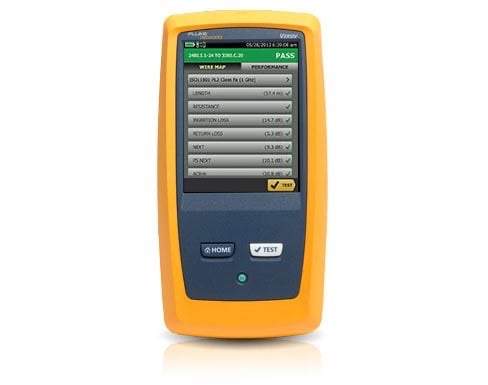
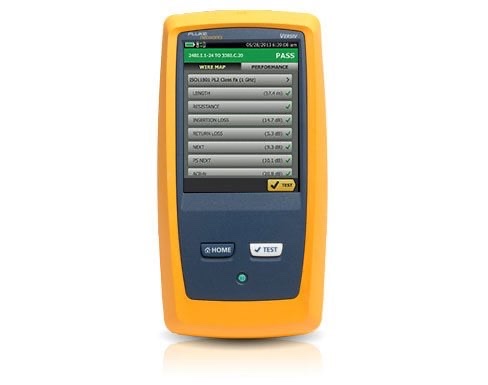
- VDV MapMaster 3.0 for room-by-room verification with multiple remote IDs
- LanSeeker for switch port verification at the IDF without CLI access
- Digital Tone & Probe for tracing through ceiling and shaft pathways
- A rented qualifier for throughput and pre-cert validation at the device end
- A Cat6A-rated certifier (Fluke DSX, Softing WireXpert, NetAlly) for full TIA acceptance
Frequently Asked Questions
Does HIPAA require specific cable certification standards?
HIPAA does not specify a cable category or test method. It requires reasonable and appropriate technical safeguards under the Security Rule. In practice, hospitals translate that into Cat6A permanent link cable certification with full TIA-568.2-D documentation as part of the broader risk analysis.
Do medical device networks need separate cable certification?
Medical device networks are typically physically or logically isolated from administrative networks. They follow the same cable certification standards as the general hospital plant but are documented separately to support FDA pre-market and post-market scrutiny of the connected device.
How are patient room cable cert tests scheduled in a working hospital?
Patient room cabling refresh in an occupied hospital is scheduled around the bed turn cycle. Rooms are vacated, taken offline by infection control, the work happens, the room is cleaned, and the room is returned to service. Certification testing must finish inside that window, typically 4-8 hours per room.
What is the difference between a hospital's IT network and its biomedical network?
The IT network carries administrative, EHR, voice, and general clinical traffic. The biomedical network carries connected medical devices that are FDA-regulated. They use the same cable infrastructure but are typically segmented at the switch layer with different VLANs and different change control.
How are healthcare cable plants tested for EMI in MRI and imaging suites?
MRI suites require shielded cable and additional grounding verification. Imaging suite cable runs are tested with the imaging equipment on and off and compared for noise floor differences. Any drop that shows degraded performance with the equipment on indicates a shielding or grounding issue.
Tools for Healthcare Cable Work
Equip your hospital cabling team with the right verification, qualification, and certification tools.