The Short Version
Where Rent vs Buy Actually Applies
The rent-vs-buy debate now covers two categories of test equipment. Full TIA-certifying instruments have always been a rental question. Gigabit throughput qualification has become one too: Platinum Tools discontinued the unit that anchored that tier for us, so proving throughput is a rent-or-subcontract line rather than a purchase. Everything below those two, buy.
Buy outright (no rental market)
- VDV MapMaster 3.0 ($168.14) -- pays back in 1 callback prevented
- LanSeeker ($80.08) -- pays back on first multi-day cable mapping project
- Digital Tone Probe ($202.66) -- essential, no rental market exists
- PoE testers, network analyzers under $1,500 -- always buy
Rental decision applies
- Fluke DSX2-5000 / DSX2-8000 ($13,000-$20,000 purchase, $200-$400/day rental)
- Softing WireXpert 500 / 4500 ($9,000-$15,000 purchase, $175-$350/day rental)
- Fluke OTDR (OptiFiber Pro) ($12,000-$18,000 purchase, $250-$450/day rental)
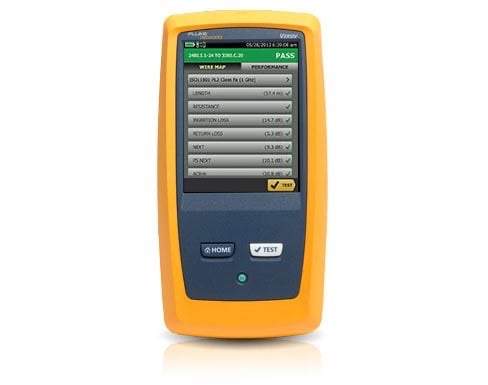
- Fluke Versiv platform with multiple modules ($15,000-$30,000 purchase, $300-$600/day rental)
What Rental Actually Costs
Rental quotes look cheap until you add the line items. Sample full cost for a 1-week DSX2-5000 rental:
| Line Item | Cost | Notes |
|---|---|---|
| Base weekly rental | $900 | Fluke DSX2-5000 with channel adapters |
| Damage waiver | $90 | 10% of base; declining waiver risks $13K liability |
| Round-trip shipping | $150 | FedEx/UPS overnight both ways |
| Reference patch cords | $45 | Often billed separately or required to purchase |
| Configuration time | $75 | Setup project profiles, test limits, etc. (1 hr labor) |
| TOTAL effective cost | $1,260 | 40% above the headline rate |
For a one-time project, $1,260 is reasonable -- the alternative is buying a $13,000 unit you may never use again. For a contractor running 4-6 such projects per year, $5,000-$7,500 in annual rental fees starts to look like a down payment.
The Break-Even Calculation
Honest break-even between renting and buying a Fluke DSX2-5000 across 5 years:
Rental cost (per year)
Effective weekly rental cost: $1,260 (with all hidden costs included). Annual cost at various usage levels:
- 5 weeks/year: $6,300/year, $31,500 over 5 years
- 10 weeks/year: $12,600/year, $63,000 over 5 years
- 20 weeks/year: $25,200/year, $126,000 over 5 years
Ownership cost (5 years)
- Purchase price: $13,000
- Annual calibration: $500/year x 5 = $2,500
- Channel adapter wear/replacement: $400
- Reference cord replacement: $200
- Battery replacement (year 3): $200
- Total 5-year cost: $16,300
- Less resale value at year 5 (~30%): -$3,900
- Net 5-year ownership cost: $12,400
Break-even crossover
Ownership ($12,400 over 5 years) becomes cheaper than renting at approximately 10 weeks of cumulative usage over the 5-year period. Above this, ownership wins on pure cost. Below this, renting wins.
For most contractors, the question is not "5 years cumulative" but "weeks per year." The clean answer:
- Less than 2 weeks per year of certification work: Rent
- 2-4 weeks per year: Borderline - rent if cash-constrained, buy if you have the capital
- 4+ weeks per year: Buy
Non-Financial Factors
Pure cost analysis misses important practical factors that often tip the decision toward ownership.
Scheduling friction
Rental certifiers must be reserved in advance, and demand spikes (year-end, summer construction season) can mean unavailability. Project schedules slip when certification day arrives and the rental unit is on backorder. Owning eliminates this risk.
Last-minute opportunities
Walking onto a job that wants certification this week is impossible without owned equipment unless you can find a rental fast. Owners can quote and execute same-day; renters cannot.
Bid confidence
Knowing you can certify any project enables more aggressive bidding on certification work. Renters tend to add buffer to certification timelines or skip those bids entirely.
Skill development
Owned equipment is used regularly enough that operators become fluent. Rental equipment requires re-learning the menus and configuration each project. Owned equipment users are more efficient per drop.
Damage liability
Rental units come with significant deductibles (often $1,000-$2,500) for damage. Owned units, if damaged, are repaired without the rental company markup -- and you can decide whether a small chip in the case is worth fixing or just living with.
Decision Framework
| Situation | Recommendation |
|---|---|
| Need it for one specific project, no future demand expected | Rent |
| 2-3 certification projects per year, predictable timing | Rent (schedule rentals in advance) |
| 4+ certification projects per year | Buy |
| Bidding on commercial work where cert is differentiator | Buy (enables aggressive bidding) |
| Cash-constrained, growing company | Rent until volume justifies purchase |
| Need fiber AND copper certification capability | Rent fiber until proven volume; buy copper if 4+ projects |
| Specialty equipment used 1-2x per year (Cat8) | Rent (insufficient volume to justify) |
| Unsure of future volume | Rent for 12 months; track usage; decide based on actual data |
The Hybrid Strategy
Many successful contractors use a hybrid approach: own the equipment they use weekly, rent specialty tools used occasionally.
Own (always available)
- VDV MapMaster 3.0 for verification on every job
- Tone generator for cable tracing
- PoE tester for camera/AP installs
Rent (occasional projects)
- Fluke DSX2-5000 for full TIA certification on quarterly large projects
- Speed qualifier for gigabit throughput proof; this tier is discontinued at Platinum Tools and CableTestShop does not list a replacement
- OTDR for occasional fiber troubleshooting
- Cat8 certifier for the rare 40G project
This approach minimizes capital tied up in rarely-used equipment while ensuring you always have the tools needed for daily work. As specialty work becomes regular, transition those tools from rent to own. For full ROI math, see our cable tester ROI guide.
Frequently Asked Questions
What does it cost to rent a Fluke DSX cable certifier?
$200-$400/day, $600-$1,200/week, $1,800-$3,500/month from major rental companies. Add 20-35% for shipping, damage waiver, and accessories. Effective true cost on a 1-week rental: ~$1,260.
What is the break-even point between renting and buying a certifier?
Approximately 4 weeks of usage per year. Below 2 weeks/year, renting wins. Above 4 weeks/year, ownership wins. Between 2-4 weeks is borderline and depends on cash flow and project predictability.
Are there hidden costs in renting test equipment?
Yes: shipping ($75-$200), damage waiver (5-15%), missing accessory charges, late return fees, calibration risk, and configuration time. Budget 20-35% above base rate for true cost.
Can I rent a basic cable tester or just certifiers?
Rental market is essentially certifier-only. Basic testers like the VDV MapMaster 3.0 ($168.14) are inexpensive enough to own. Rent vs buy is only meaningful for $5,000+ certifiers.
Equipment You Should Own, Not Rent
Browse the daily-use testers and certifiers that pay for themselves quickly.